
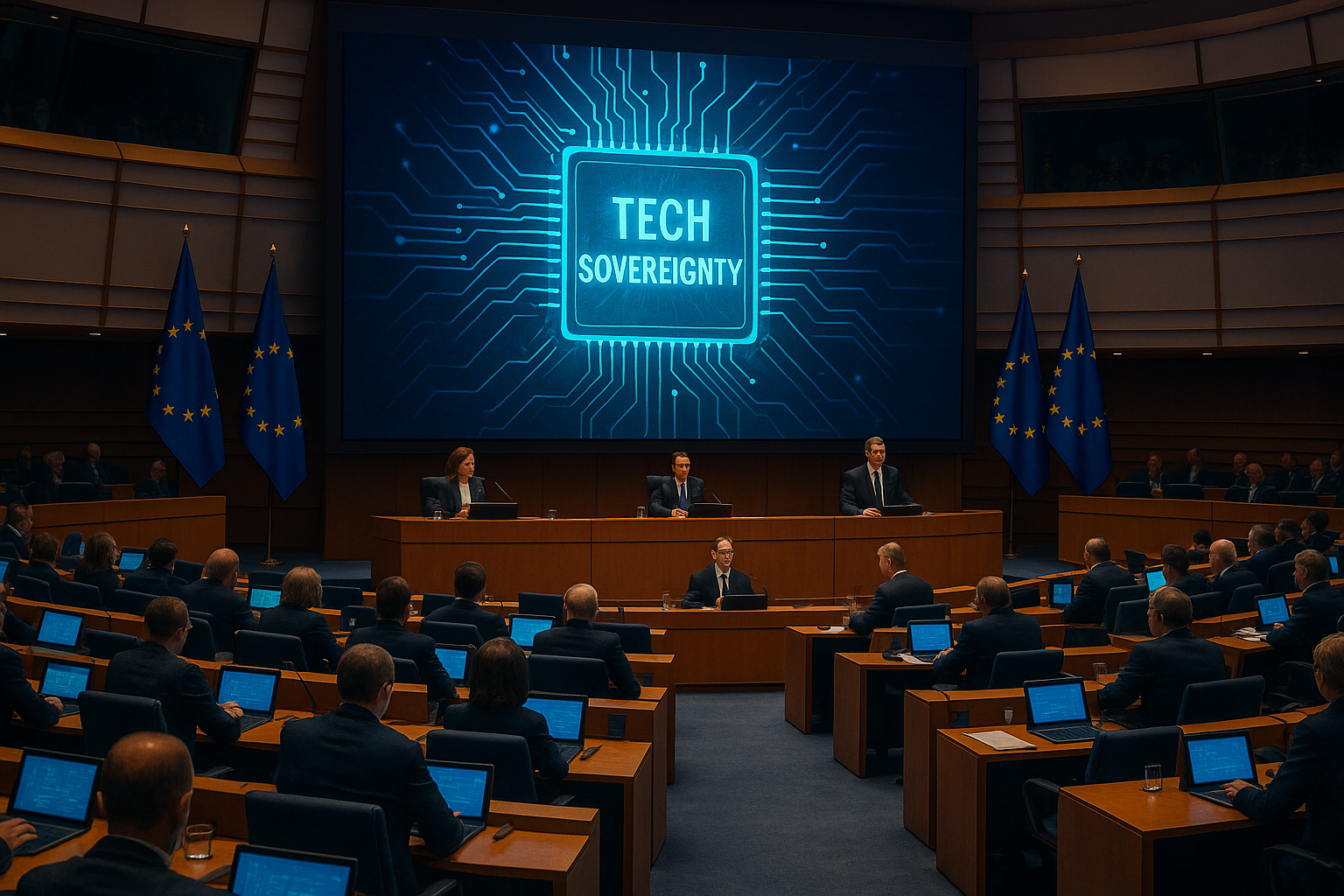
The European Parliament is preparing to vote on a major proposal for technology sovereignty, marking a potential turning point for Europe’s digital competitiveness. The initiative, led by the Committee on Industry, Research and Energy (ITRE) and backed by pro-Bitcoin lawmaker Sarah Knafo, aims to position Europe as a global player in digital infrastructure and innovation.
Proposal Targets Digital Independence
On June 3, 2025, ITRE adopted a non-binding report urging the European Union to develop a strategic policy for digital technologies. The proposal highlights concerns that Europe is lagging behind the U.S. and China in critical areas such as:
- Artificial Intelligence
- Semiconductors
- Cloud computing
- Cybersecurity
- Blockchain infrastructure
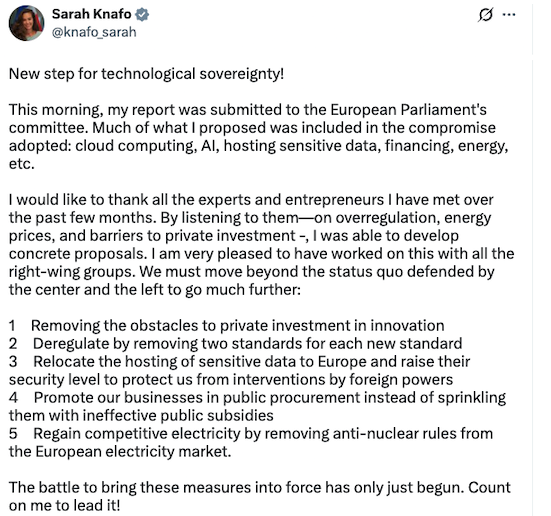
The report advocates for eliminating barriers to private innovation investment, promoting energy-efficient computing, and protecting digital finance privacy.
Parliament Vote Slated for July
The full European Parliament vote is expected in July, during the upcoming plenary session. Knafo, who authored the report, emphasized that although the document is not legally binding, it serves as an essential political guideline.
“If all the right-wing parties vote in favor, we have a good chance to get a majority,” Knafo stated, acknowledging opposition pressure from left-wing parties that could influence the outcome.
Digital Revolution Still in Early Stages
According to Knafo, Europe is at the beginning of the digital revolution, but progress is slow due to a lack of coordinated political support.
“We have all the talented engineers and scientists we need. We just need a suitable political frame to let them work in Europe,” she said.
Skeptics argue the real push for change may come from national governments rather than EU-level legislation, pointing to recent developments in countries like Poland and the Netherlands.
Knafo Rejects Digital Euro, Supports Bitcoin Reserve
Knafo has consistently opposed the European Central Bank’s plan for a digital euro, calling instead for the creation of a Bitcoin strategic reserve.
“No to the digital euro, yes to a strategic Bitcoin reserve,” she declared in a speech in late 2024.
However, the ECB has taken a firm stance in favor of the digital euro, with President Christine Lagarde rejecting Bitcoin as a reserve asset due to its volatility and perceived security risks.
Conclusion
The upcoming vote on Europe’s tech sovereignty proposal will serve as a crucial test of political will across the continent. While momentum builds for a more digitally independent Europe, internal divisions may determine whether this policy becomes a foundation for long-term change — or another stalled initiative.