
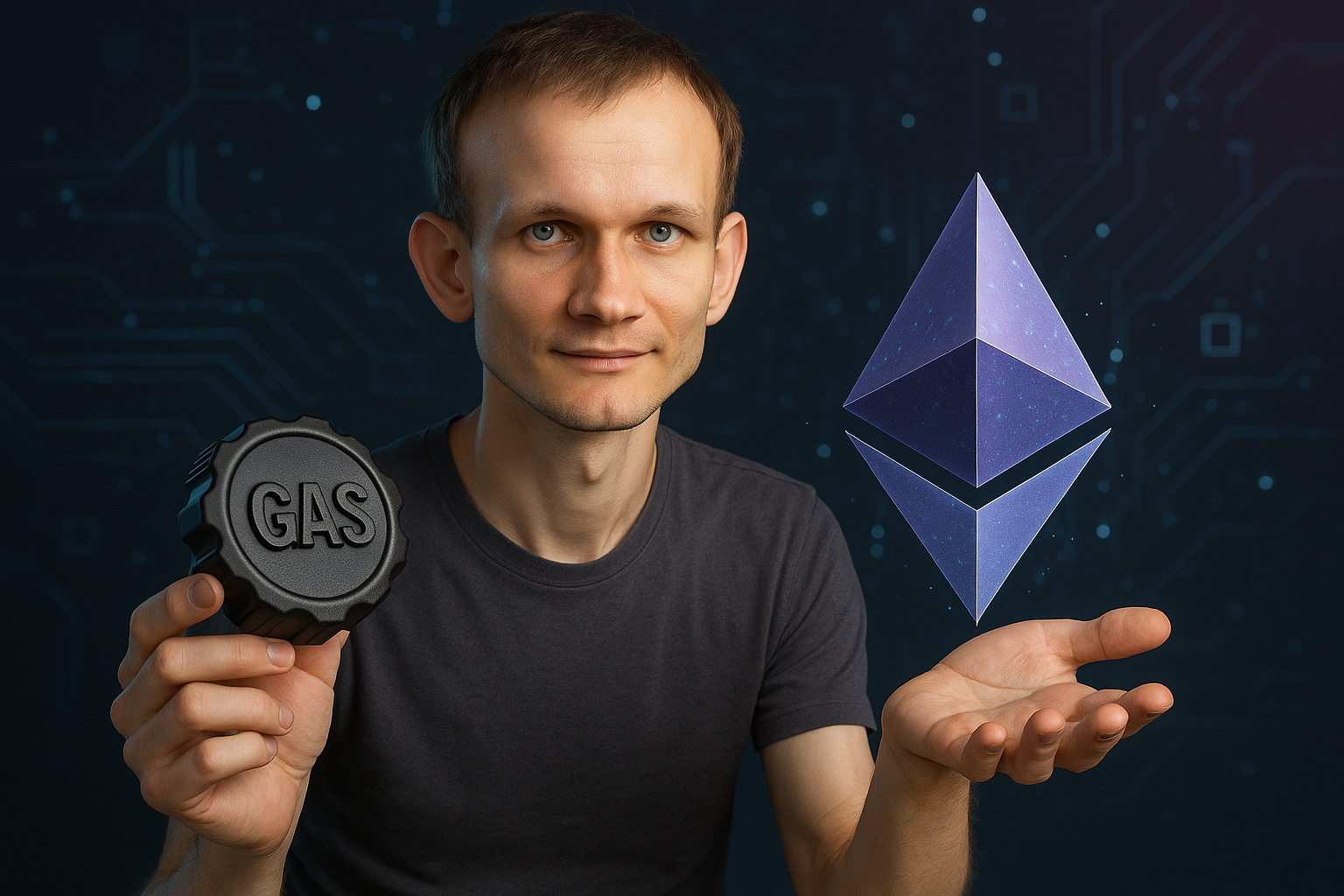
Ethereum co-founder Vitalik Buterin has co-authored a new proposal, EIP-7983, that aims to cap gas usage per transaction at 16,777,216 gas, marking a significant step toward enhancing network efficiency and execution predictability.
Why Ethereum Needs a Gas Cap
Currently, a single transaction on Ethereum can consume an entire block’s gas limit, creating significant engineering and execution challenges. This structure can introduce instability in block execution and reduce performance, especially in scenarios where zero-knowledge virtual machines (zkVMs) or parallel processing engines are involved.
By capping the gas per transaction, the Ethereum team intends to prevent bottlenecks, balance workloads across processing threads, and support more predictable execution across the blockchain.
“16,777,216 is nice because it makes it easier to subdivide things, potentially simplifying downstream engineering,” noted a contributor on the proposal’s GitHub discussion.
Technical Details of EIP-7983
The new limit — exactly 2²⁴ gas — is proposed as a hard ceiling on any single Ethereum transaction. This means no transaction will be allowed to consume more gas than this cap, even if the block has capacity left.
Currently, Ethereum blocks can hold transactions up to around 30 million gas combined. But under EIP-7983, each transaction must stay under the 16.7M threshold, possibly requiring some smart contract deployments or batch processes to split into smaller chunks.
Compatibility and Real-World Impact
According to the proposal authors, most transactions on Ethereum already use significantly less than 16.7 million gas, so real-world disruption should be minimal. This change primarily affects large-scale deployments or complex contract interactions.
Importantly, EIP-7983 aligns with other modular and performance-focused efforts like EIP-7825, and fits into Ethereum’s evolving vision of a more scalable, modular blockchain architecture.
What’s Next for the Proposal?
Currently in draft status, EIP-7983 is open for community discussion and developer feedback. If implemented, it would be one of Ethereum’s most notable execution-layer changes in recent years, offering greater predictability, improved performance, and better parallelization for advanced applications.
As Ethereum continues to scale and support more decentralized applications, proposals like EIP-7983 highlight the network’s commitment to efficiency, developer experience, and modular design.
Disclaimer
This content is for informational purposes only and does not constitute financial, investment, or legal advice. Cryptocurrency trading involves risk and may result in financial loss.