
Unusual Disk Activity Raises Alarms
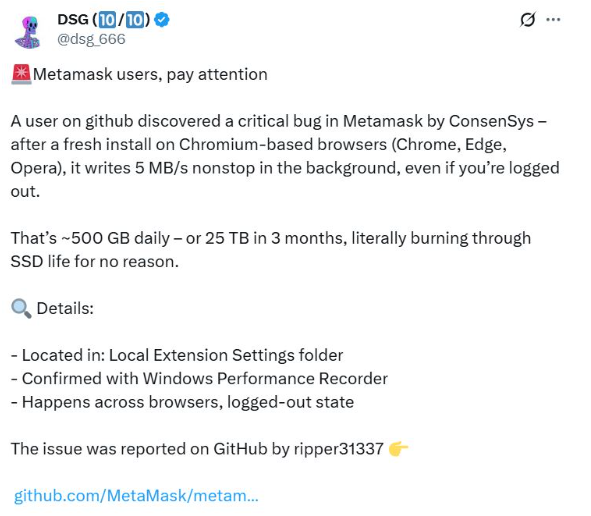
A critical bug in the MetaMask browser extension is causing excessive data writes to solid-state drives (SSDs), threatening their long-term health. Blockchain development firm Consensys, the team behind MetaMask, confirmed that it is aware of the issue and will be releasing a fix “imminently.”
Users began reporting abnormal disk usage behavior earlier this year. One user on GitHub, “ripper31337,” noted that MetaMask was writing data to disk at a rate of 5 MB/sec, even while idle. Over the course of a day, that totals 500 GB, or 25 TB over three months — enough to cut SSD lifespan significantly.
What’s Causing It?
According to Consensys, the issue seems to affect users with “unusually large state” in their MetaMask extensions — possibly from frequent DeFi activity or connected dApps.
While browser wallets regularly write session state data to disk, this level of write activity is far from normal. Another user, “PopCatMAGA,” recently claimed the bug destroyed 50% of their SSD’s health, adding that many users may not realize what’s happening in the background.
Reports Date Back Months
The earliest confirmed report came on May 9, when a user in a MacOS Chrome environment noticed MetaMask wrote 100 GB in one day — even without interaction. Disabling the plugin immediately slowed disk activity.
Despite this, the bug reportedly remained active into mid-July, with mounting frustration from affected users. “Fix this mess already — seriously, this is unacceptable,” wrote one reviewer.
Consensys Promises a Fix
A spokesperson told Cointelegraph that a patch is underway and added:
“We’re exploring strategies to reduce state size, the size of each write operation, and reduce fetch frequency when data isn’t being actively used.”
These changes are expected to optimize MetaMask’s performance and protect SSD health, especially for power users who keep browsers running around the clock.
Take Action Now
Until a fix is officially released, users are advised to disable MetaMask when not in use and monitor SSD write activity using system tools. Regular users and developers should also check for extension updates in the Chrome Web Store.
The incident is a stark reminder that browser extensions with blockchain functionality can have unintended hardware impacts — and users must remain vigilant.
Disclaimer
This content is for informational purposes only and does not constitute financial, investment, or legal advice. Cryptocurrency trading involves risk and may result in financial loss.