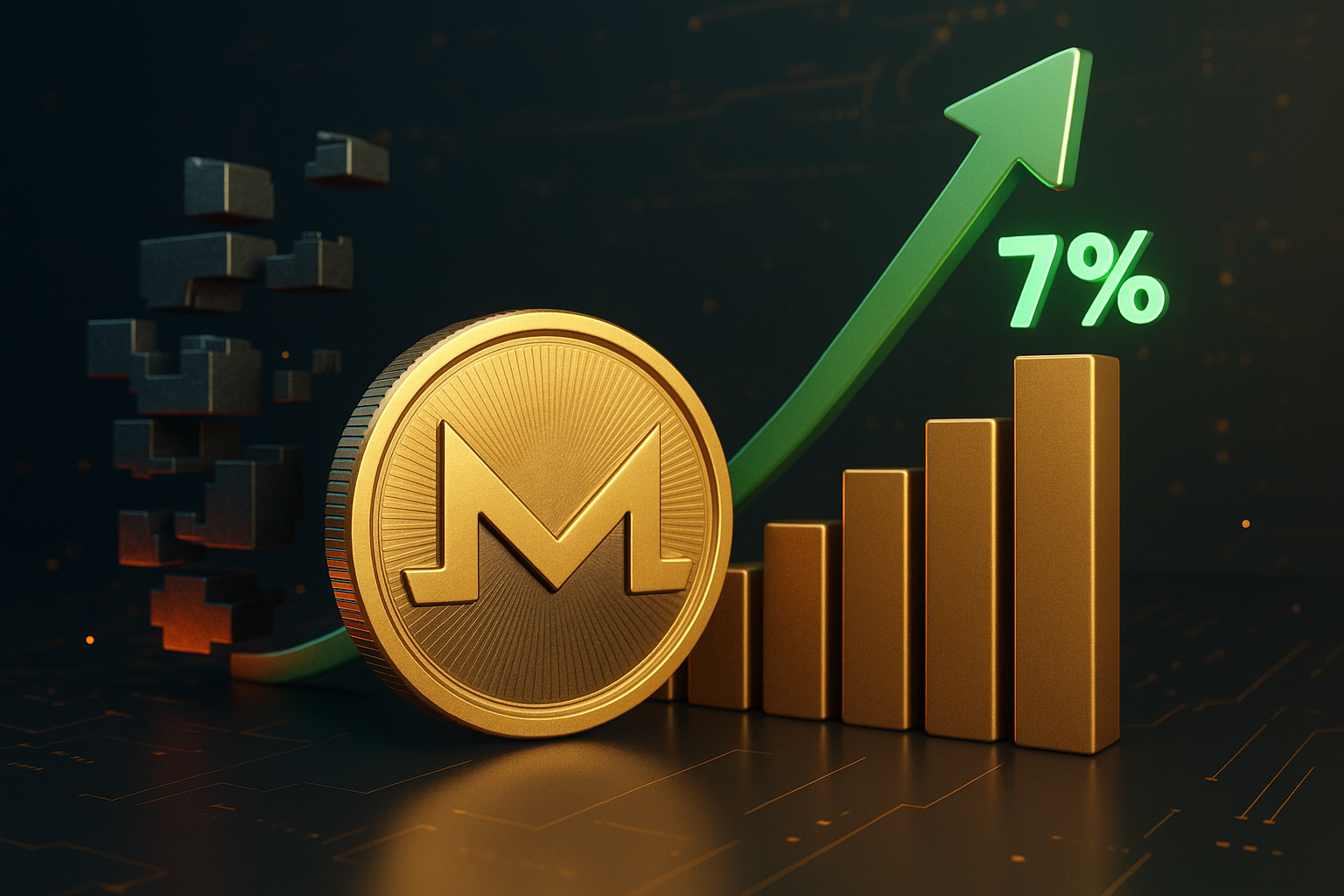
Monero (XMR), the leading privacy-focused cryptocurrency, posted a 7% rally on Sunday even as its blockchain suffered a major 18-block reorganization (reorg) — the largest in its history. The incident reversed around 117 transactions and raised fresh concerns about the long-term stability of the Monero ecosystem.
According to Monero node operators, the reorg began at block 3,499,659 at 5:12 am UTC and ended at block 3,499,676 roughly 43 minutes later. The attack was executed by Qubic, an AI-driven blockchain and mining pool that has previously gained over 51% of Monero’s hashrate.
This follows a similar six-block reorg last month, suggesting that Qubic’s influence on the Monero network is not only persistent but growing.
Market Reaction
Surprisingly, XMR traded flat during the attack and only hours later spiked from $287.54 to $308.55, marking a 7.4% increase while the broader crypto market dipped around 1%.
Some analysts speculate that Qubic’s actions may even be designed to stabilize XMR’s price in the short term.
Why This Is a Big Deal
A blockchain reorg occurs when competing versions of the chain emerge, leading to the replacement of previously confirmed transactions. In this case, Monero’s 10-block safeguard was surpassed, exposing vulnerabilities in its proof-of-work model.
Security experts warn that repeated reorgs undermine Monero’s reliability as a payment network, especially for merchants who depend on transaction finality.
Yu Xian, founder of SlowMist, cautioned:
“If no one in the Monero community takes the issue of block reorganization seriously, then this Sword of Damocles will always hang over Monero’s head.”
Possible Solutions Being Considered
The Monero community has been debating several countermeasures:
- DNS checkpoints – Nodes fetch block data from trusted community servers to prevent reorgs.
- Consensus upgrades – Exploring alternatives to proof-of-work that are resistant to 51% dominance.
- Merge mining – Allowing Monero to be mined alongside Bitcoin or other coins for greater decentralization.
- ChainLocks-style protection – Borrowing from Dash’s model to lock confirmed blocks against reorganizations.
Each solution, however, comes with trade-offs between security and decentralization.
Despite technical setbacks, Monero remains one of the most widely used privacy coins, valued for its untraceable transactions. However, the Qubic attacks highlight critical weaknesses in under-secured proof-of-work blockchains.
If the community cannot implement effective safeguards, Monero’s long-term credibility as a decentralized monetary system may erode — even if its short-term price resilience remains strong.
Disclaimer
This content is for informational purposes only and does not constitute financial, investment, or legal advice. Cryptocurrency trading involves risk and may result in financial loss.