

Trade war tensions and risk-off sentiment drive the biggest crypto crash of the year while investors flock to safe-haven assets
The global financial landscape experienced one of its most volatile weeks of 2025, as the cryptocurrency market plunged sharply, wiping out more than $20 billion in leveraged positions. The sell-off was sparked by renewed U.S.–China trade tensions and amplified by macroeconomic uncertainty, while gold prices soared to an all-time high above $4,000 per ounce amid a rush toward safety.
Crypto’s biggest liquidation in history
Bitcoin reached a new all-time high of $118,500 on October 6, fueled by optimism around institutional inflows and easing monetary policy expectations.The turmoil began on October 10, following President Trump’s announcement of a 100% tariff on Chinese imports, a move that triggered a wave of risk aversion across global markets. Within hours, Bitcoin fell below $105,000, and Ethereum dropped toward $3,800, as traders rapidly unwound leveraged positions.
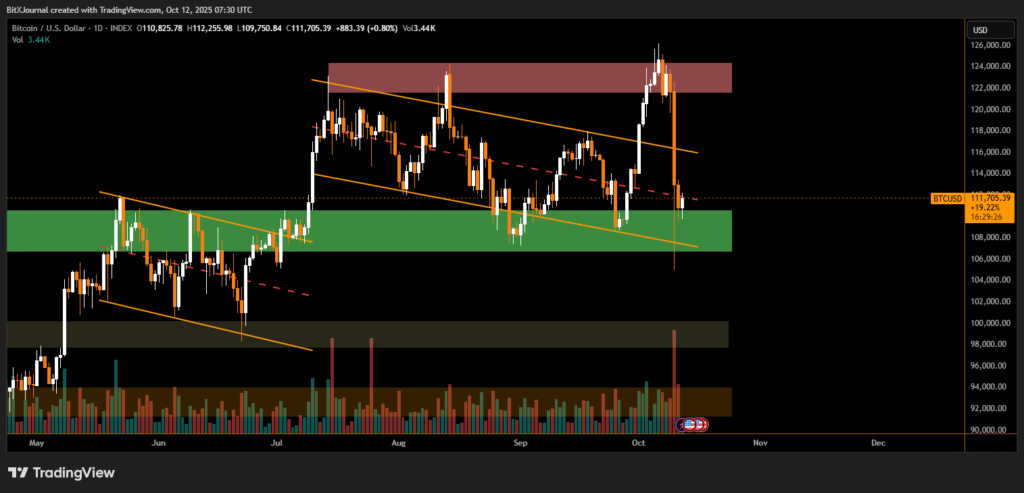
Market data confirmed that nearly $20 billion in long positions were liquidated, making it the largest single-day wipeout ever recorded in the crypto sector.
“When high leverage meets macro shocks, the market resets aggressively,” said BITX digital asset strategist. “This liquidation was not a collapse of fundamentals but a sharp deleveraging event after weeks of excessive optimism.”
Safe-haven surge and capital rotation
As crypto markets tumbled, gold broke through $4,000 per ounce for the first time, peaking around $4,050 on October 8. Analysts attributed the rally to surging safe-haven demand, expectations of U.S. rate cuts, and inflows from institutional investors hedging against market instability.
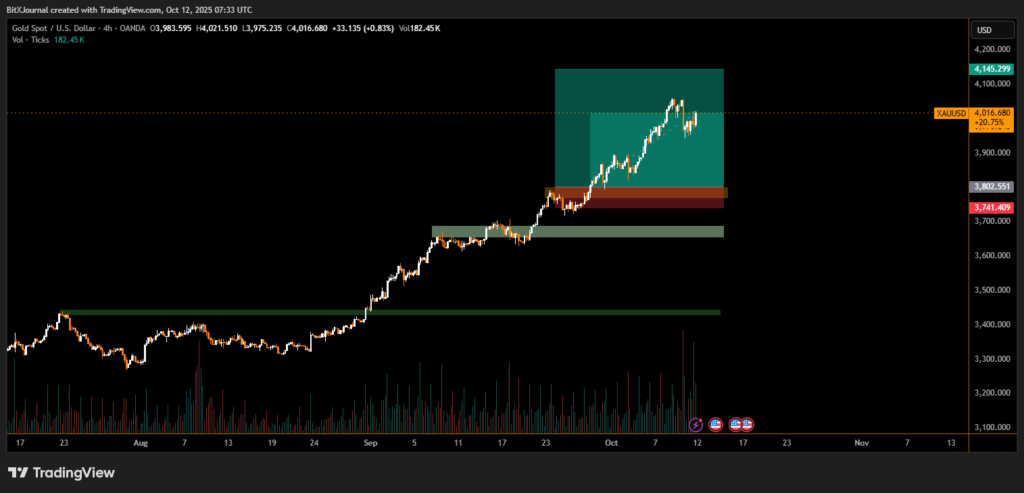
“This is a textbook example of capital rotation,” explained BITX senior commodities analyst. “Money leaving speculative assets often finds its way into traditional hedges like gold, especially when geopolitical tension rises.”
Despite the crash, total crypto market capitalization remained near $3.8 trillion, showing resilience amid the liquidation wave. Bitcoin dominance briefly touched 63% before retreating to 60%, suggesting traders began reallocating into altcoins as volatility eased.
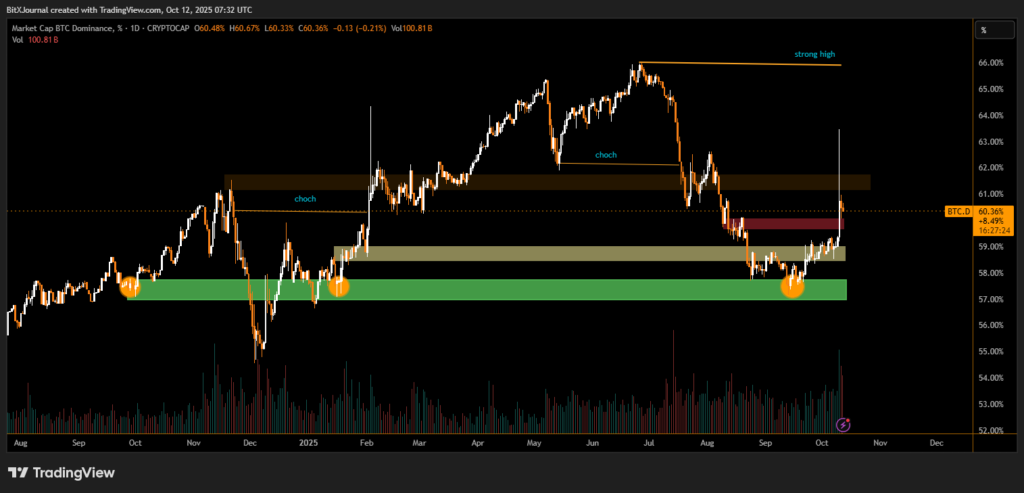
Analysts caution that the market is now in a “rebalancing phase”, where reduced leverage could set the stage for healthier long-term growth once macro conditions stabilize.
Still, the $20 billion liquidation serves as a reminder of crypto’s vulnerability to external shocks, reinforcing the delicate balance between innovation and global risk sentiment.
Disclaimer
This content is for informational purposes only and does not constitute financial, investment, or legal advice. Cryptocurrency trading involves risk and may result in financial loss.