
Switzerland’s gambling regulator, GESPA, has filed a criminal complaint against FIFA Collect, alleging that the football body’s World Cup-themed NFT platform violates the country’s gambling laws.
GESPA Alleges Illegal Gambling Activity
In a statement issued Friday, the Swiss Gambling Supervisory Authority (GESPA) said it became aware of FIFA Collect — the online platform hosted at collect.fifa.com — earlier this month.
The regulator claims the platform offers competitions, drops, and challenges that function as unlicensed gambling services in Switzerland.
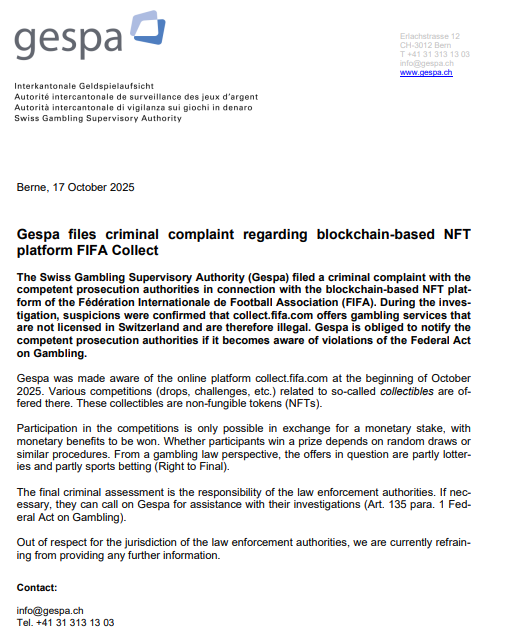
According to GESPA, participants must stake money to enter contests that award cash prizes, with winners determined by random draws or chance-based procedures.
“From a gambling law perspective, these offerings constitute, in part, lotteries and, in part, sports betting,” the regulator said.
GESPA formally reported the violation to Swiss prosecutors, stating that FIFA Collect operates without a required gambling license. The final decision on criminal liability will now rest with law enforcement authorities.
FIFA, headquartered in Zurich, did not immediately respond to requests for comment.
Background: FIFA’s NFT and Blockchain Push
FIFA launched its digital collectibles project ahead of the 2022 World Cup, initially built on Algorand before migrating to Polygon in 2023.
The project offered fans a chance to own digital moments from FIFA tournaments and, more recently, to win tickets to the 2026 World Cup through participation in new NFT drops.
“This makes FIFA collectibles available to any football fan, democratizing the ability to own a part of the FIFA World Cup,” said Romy Gai, FIFA’s Chief Business Officer, when the initiative debuted.
Earlier in 2025, FIFA also announced plans to develop its own EVM-compatible blockchain, dubbed “FIFA Blockchain,” leveraging the Avalanche tech stack. The goal is to migrate all FIFA NFTs to the new network and expand its Web3 ecosystem.
The GESPA complaint could set a regulatory precedent for NFT-based competitions that include monetary entry fees and prize pools, potentially classifying them as gambling products under Swiss law.
As global regulators tighten their focus on crypto and digital assets, the FIFA case highlights the growing scrutiny of blockchain-based fan engagement tools, particularly those blending collectibles with chance-driven rewards.
Disclaimer
This content is for informational purposes only and does not constitute financial, investment, or legal advice. Cryptocurrency trading involves risk and may result in financial loss.