
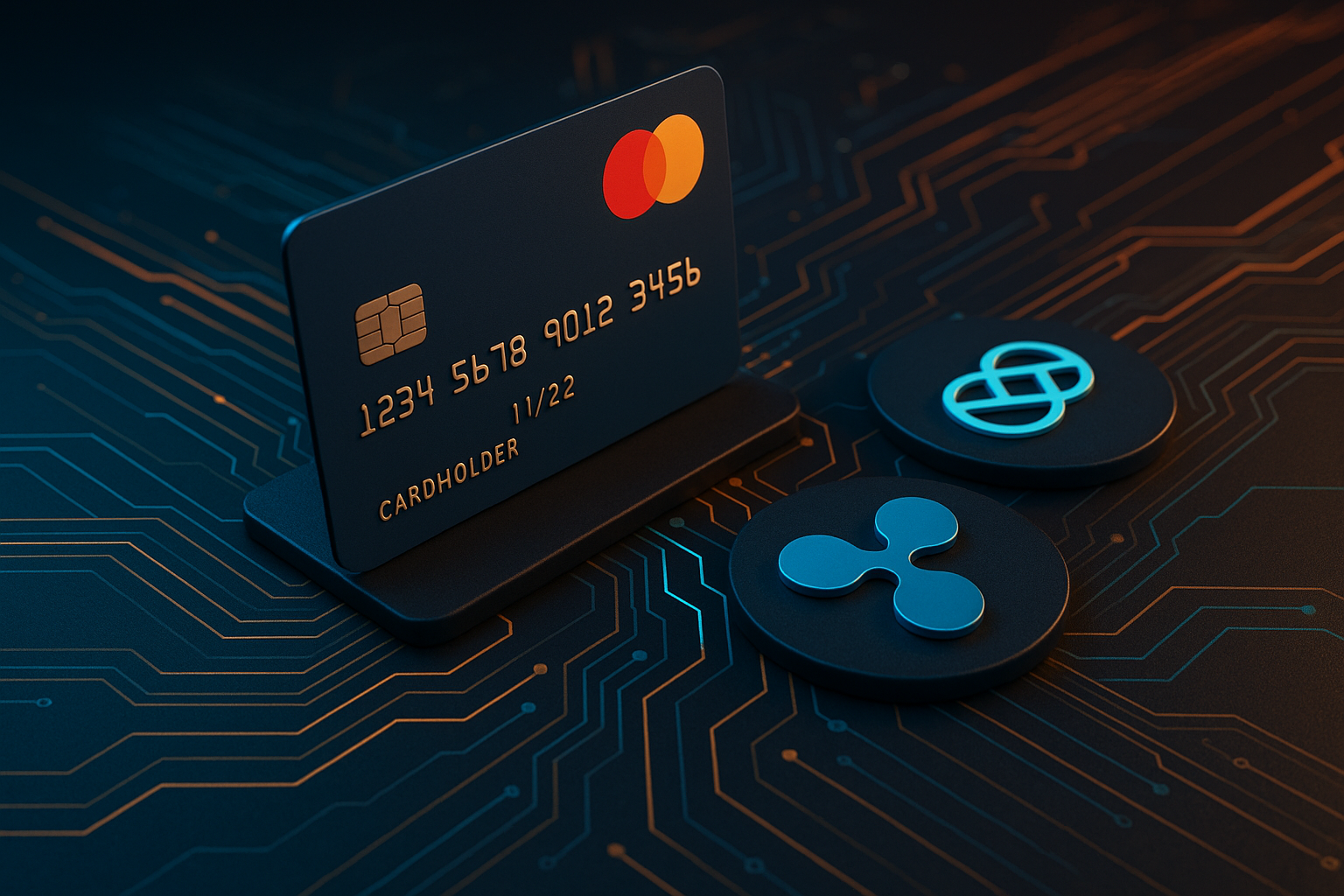
The initiative marks one of the first collaborations where a regulated U.S. bank settles traditional card payments through a regulated stablecoin on a public blockchain.
Mastercard, Ripple, and Gemini Join Forces for Blockchain-Based Payments
Mastercard is collaborating with Ripple and Gemini to explore using RLUSD, a regulated stablecoin on the XRP Ledger (XRPL), for settling fiat card transactions, the companies announced on Wednesday.
According to the joint statement, “this will mark one of the first collaborations where a regulated U.S. bank settles traditional card transactions using a regulated stablecoin on a public blockchain.”
The move represents a major step toward integrating stablecoin-based settlements into mainstream financial infrastructure, leveraging XRPL’s efficiency and transparency for faster, cheaper transaction processing.
Gemini’s XRP Credit Card Leads the Way
As part of the partnership, Gemini, founded by Cameron and Tyler Winklevoss, will pilot the initiative through its XRP edition of the Gemini Credit Card, issued by WebBank.
“Through the Gemini Credit Card, we’re advancing the way that digital assets are integrated into everyday spending,” said Dan Chen, Gemini’s Chief Financial Officer.
Gemini’s XRP card allows users to earn rewards in XRP, while WebBank—the card issuer—will play a key role in testing RLUSD-based settlement between Mastercard’s payment network and Ripple’s blockchain infrastructure.
In October, Gemini also introduced a Solana edition of its credit card, offering up to 4% cashback in SOL tokens, underscoring its strategy to blend crypto rewards with traditional finance.
Ripple’s XRPL as the Settlement Backbone
The XRP Ledger (XRPL), maintained by the Ripple ecosystem, is an open-source blockchain optimized for real-time payments and low-cost settlements. Ripple serves as XRPL’s primary corporate advocate, promoting its adoption among global banks and fintech firms.
By using RLUSD on XRPL, Mastercard and its partners aim to settle card payments in near real-time, bypassing traditional multi-day banking rails and minimizing liquidity friction.
Mastercard Expands Its Digital Asset Footprint
Mastercard’s growing presence in the crypto and blockchain space includes multiple partnerships designed to merge Web3 innovation with regulated finance.
In June 2025, Mastercard partnered with Chainlink to enable secure fiat-to-crypto conversions directly onchain, enhancing accessibility for consumers seeking to transact across digital and traditional ecosystems.
On the same day as the XRPL announcement, Humanity Protocol, a digital identity platform, revealed a new partnership with Mastercard to offer open finance tools that give users access to credit, loans, and real-world financial services through blockchain-based identity verification.
The Mastercard–Ripple–Gemini collaboration underscores the maturing intersection of blockchain and traditional payments, signaling how regulated stablecoins like RLUSD could soon play a central role in real-world financial settlement.
If successful, the initiative could pave the way for faster, more transparent, and cost-efficient payment systems, marking a pivotal moment in the mainstream adoption of blockchain-based finance.
Disclaimer
This content is for informational purposes only and does not constitute financial, investment, or legal advice. Cryptocurrency trading involves risk and may result in financial loss.