

ETH falls into a key demand zone after repeated structure breaks and liquidity sweeps
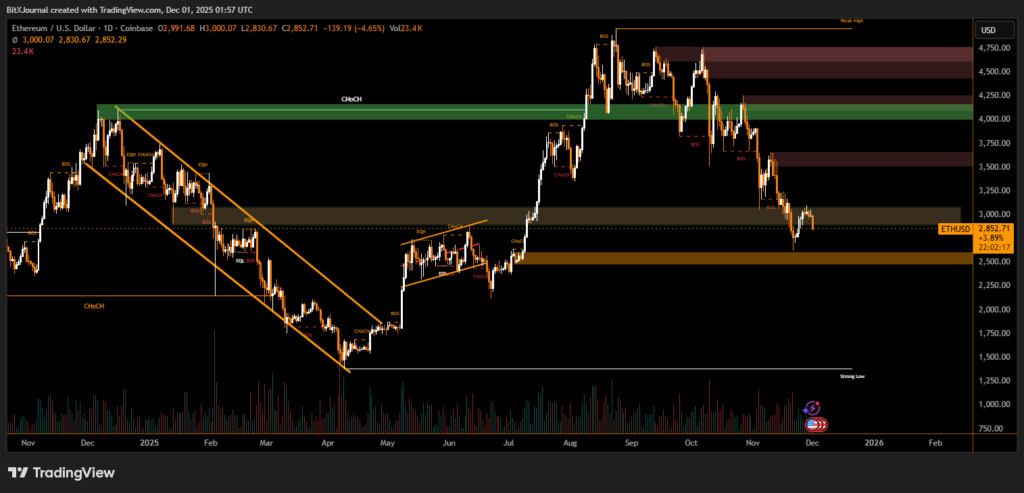
Ethereum has declined to $2,800, entering a major demand zone after weeks of structural weakening across higher timeframes. The move reflects a combination of trend shifts, failed bullish attempts, and liquidity-driven price action, which have shaped ETH’s current correction phase.
Why Ethereum Fell to $2,800
The market shows multiple Break of Structure (BOS) and Change of Character (CHoCH) signals forming since mid-October, underscoring a clear shift from bullish momentum to downside control. Price rejected a significant supply zone near $4,000–$4,300, marking the beginning of a broader downtrend.
ETH then broke through successive support levels, with each bounce forming lower highs — a classic sign of weakening demand. The market also swept equal lows, clearing out liquidity before resuming its decline. This pattern demonstrates that sellers were consistently reclaiming control after every short-term recovery.
A key factor in the drop is the return to a previously tested imbalance and demand zone between $2,700–$2,900, where price historically found strong reaction. The current touch of this zone shows ETH aligning with a common corrective pattern: clearing liquidity before revisiting institutional demand.
Ethereum’s slide to $2,800 is driven by a technically clean sequence of structure breaks, liquidity sweeps, and supply rejections. This corrective phase reflects broader market weakness, with near-term price direction hinging on the strength of the current demand zone.
Disclaimer
This content is for informational purposes only and does not constitute financial, investment, or legal advice. Cryptocurrency trading involves risk and may result in financial loss.