Why Multiple Blockchains Are Shaping the Future of Tokenized Assets
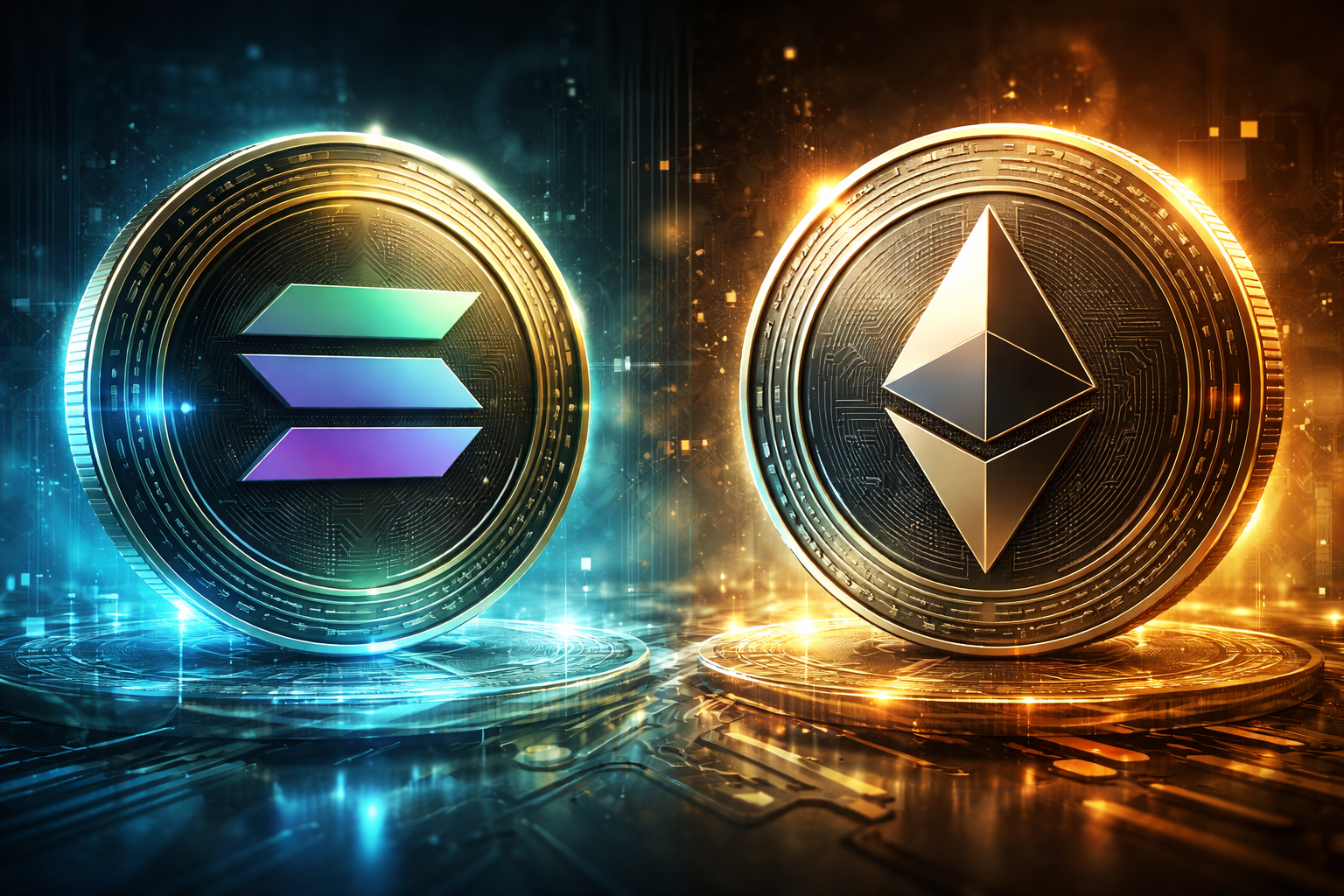
As the global financial system explores asset tokenization, debate continues over which blockchain will dominate. However, recent industry insights suggest the future will not belong to a single network. Instead, Ethereum and Solana are positioned to grow side by side, each serving distinct onchain needs as tokenized assets expand.
Ethereum currently holds the strongest position in terms of total network asset value, including stablecoins, with approximately $183.7 billion locked onchain. Most stablecoins and long-term decentralized finance activity remain concentrated on Ethereum, reinforcing its role as the primary settlement layer for tokenized real-world assets. This dominance reflects deep liquidity, institutional trust, and mature infrastructure.
Solana Excels in High-Volume Transactions
Solana, with a network asset value of around $15.9 billion, plays a different but critical role. It processes significantly higher trading volumes due to faster transaction speeds and lower costs. These features make Solana more suitable for consumer-facing applications, gaming, and frequent trading activity.

No single blockchain can realistically scale to support all global tokenized assets. As onchain economic activity grows, different blockchains will specialize in different use cases. Platforms are already migrating between networks as business requirements evolve, highlighting a flexible, multi-chain ecosystem.
The tokenization race is not about winners and losers. Ethereum and Solana address different market needs, and their coexistence reflects a broader shift toward specialization rather than consolidation. As more assets move onchain, multiple blockchains will be essential to support global demand.
Disclaimer
This content is for informational purposes only and does not constitute financial, investment, or legal advice. Cryptocurrency trading involves risk and may result in financial loss.