

The U.S. Securities and Exchange Commission (SEC) has raised concerns over the eligibility of REX Financial and Osprey Funds’ staked Ethereum (ETH) and Solana (SOL) exchange-traded funds (ETFs), suggesting the funds may not comply with the Investment Company Act or meet the criteria under the 6C-11 ETF rule.
Key Points
- SEC Warning: The rare C-corp structure used by REX-Osprey could disqualify the funds from ETF status.
- Crypto Assets Involved: Solana (SOL) – $155.04 | Ethereum (ETH) – $2,510
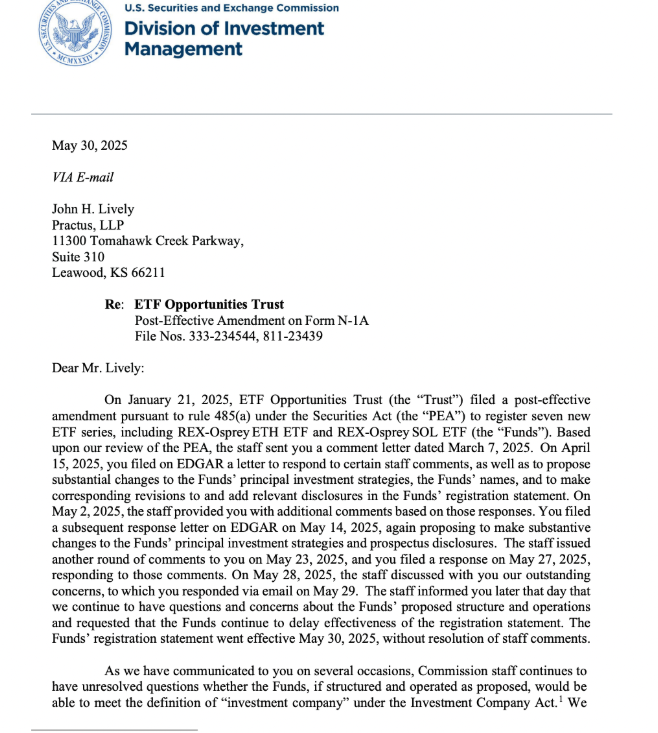
- SEC Letter (May 30): Questions whether the funds meet the legal definition of an “investment company.”
- Potential Misleading Disclosures: The SEC flagged potentially misleading registration disclosures.
What’s the Issue?
The 6C-11 rule, also known as the “ETF rule,” standardizes the types of corporate structures that qualify for exchange-traded funds. According to a May 30 letter from the SEC:
“Commission staff continues to have unresolved questions about whether the Funds, if structured and operated as proposed, would be able to meet the definition of ‘investment company’ under the Investment Company Act.”
Optimism Remains Despite Setback
- REX Legal Team Confident: Lawyers believe the issue is resolvable.
- Analyst Take: Bloomberg’s Eric Balchunas says issuers are “pushing the envelope hard” to gain first-mover advantage.
- October Deadline: Final SEC decision dates for most staking ETF filings fall in October, and early delays are typical.
Market Implications
Approval of staked crypto ETFs could bring a wave of institutional capital into Ethereum, Solana, and broader altcoin markets—making this decision crucial for:
- Traditional asset managers
- Retail crypto investors
- Long-term DeFi ecosystem growth
Broader Context
- Staking Guidance: The SEC previously clarified that crypto staking doesn’t automatically qualify as a securities transaction.
- Pending Decisions: Several staked and altcoin ETF filings remain in limbo, even with updated guidance.
- Investor Focus: The outcome may set precedent for how staking-related financial products are regulated in the U.S.