
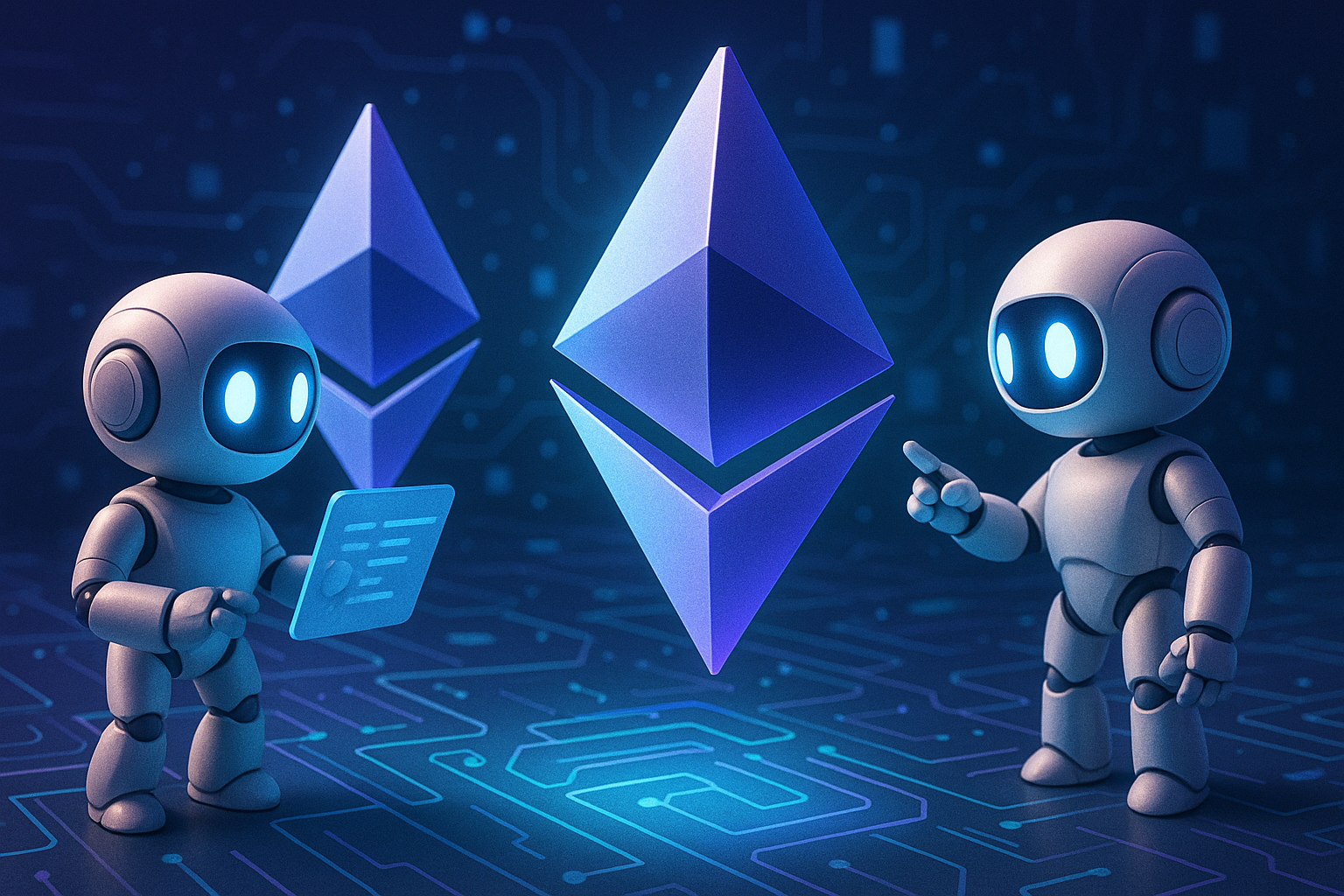
Leveraging a forgotten web standard and Ethereum upgrades, autonomous AI could usher in a new era of automated crypto payments.
Autonomous AI agents — programs capable of thinking, transacting, and making decisions without human input — could soon emerge as Ethereum’s most active users, according to two developers at Coinbase. By combining a decades-old HTTP web status code with Ethereum Improvement Proposal (EIP) 3009, these agents can now make real-world stablecoin payments directly on-chain.
The concept centers on HTTP 402: “Payment Required”, a status code proposed nearly 30 years ago but rarely used on the web. Together with EIP 3009, it enables AI systems to authorize stablecoin transfers instantly — no manual approvals or traditional payment infrastructure required.
Coinbase has already rolled out an implementation via its “x402 payments protocol”, allowing autonomous software to respond to payment requests the same way a vending machine exchanges money for goods.
“One round trip. Like a vending machine. No accounts required,” wrote Coinbase developers Kevin Leffew and Lincoln Murr.
Transformative Potential for E-Commerce
The developers envision scenarios where AI agents could:
- Self-driving taxis pay for their own charging or road tolls.
- AI models purchase compute power or data storage on demand.
- Applications automatically use stablecoins to store data permanently on-chain.
The key advantage is removing the need for humans to manage wallets, approve transactions, or handle disputes manually. Ethereum’s trustless settlement layer ensures atomic payments, programmable policies, and easy integration with composable wallets — making it well-suited for HTTP 402 adoption.
Although still in its early stages, developers are testing real-world use cases. Hyperbolic Labs is integrating x402 into a large language model, while Prodia Labs is applying it for AI-generated images and video content.
The Coinbase team notes that the true breakthrough is the ability for AI agents to autonomously chain services into complete economic loops — purchasing inputs, processing them, and selling outputs — all without human oversight.
If this model scales, Ethereum could become the global transaction backbone for autonomous software, enabling an economy where machines routinely pay for goods and services. This would mark a major shift from human-initiated crypto use toward machine-native financial activity — a development the Coinbase team believes could redefine blockchain’s role in the digital economy.
Disclaimer
This content is for informational purposes only and does not constitute financial, investment, or legal advice. Cryptocurrency trading involves risk and may result in financial loss.