

Bank of England (BOE) governor Andrew Bailey has issued a strong warning against the issuance of private stablecoins, emphasizing the potential risks to the financial system. Speaking to The Sunday Times, Bailey argued that tokenized bank deposits, rather than stablecoins, should be the UK’s preferred approach to integrating digital assets into the monetary system.
UK Central Bank Opposes Private Stablecoin Models
Bailey stressed that privately issued stablecoins could undermine monetary sovereignty. He cautioned that if banks or private firms begin issuing stablecoins widely, it could erode public trust and destabilize existing financial institutions.
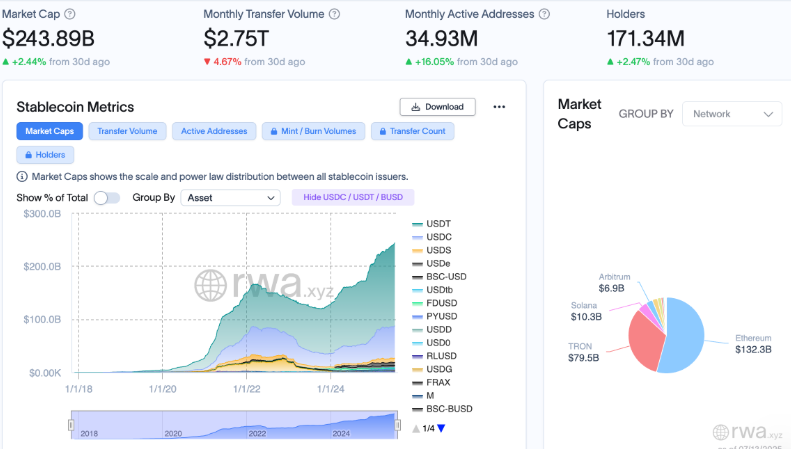
“Stablecoins could weaken the state’s ability to control its own currency,” he warned.
Instead of launching a central bank digital currency (CBDC) or supporting third-party digital tokens, Bailey advocated for the tokenization of traditional bank deposits, which would still operate under the supervision of regulated financial entities.
Andrew Bailey Takes Stablecoin Concerns Global as FSB Chair
In his new role as Chairman of the Financial Stability Board (FSB), Bailey’s comments signal a broader international effort to curb the growth of unregulated stablecoins. The FSB is expected to push for stronger global coordination on digital asset oversight in 2025.
Bailey’s views reflect growing sentiment among European regulators, who fear that dollar-pegged stablecoins like USDT and USDC could weaken the euro’s role in cross-border finance.
A Contrast in Strategy: US Goes All-In on Stablecoins
While Europe warns of stablecoin risks, the United States is accelerating its support. Under the Trump administration, stablecoins have been positioned as tools to expand U.S. dollar dominance globally.
- U.S. Treasury Secretary Scott Bessent said stablecoins would help preserve the dollar’s reserve currency status.
- Federal Reserve Chair Jerome Powell has called for clear regulatory frameworks to allow stablecoin adoption.
Privately issued stablecoins are often backed by U.S. Treasury bills and cash, spreading global access to U.S. debt instruments.
Diverging Stablecoin Policies Between US and UK
The Bank of England’s resistance to private stablecoins reflects a preference for state-supervised digital infrastructure, while the U.S. sees stablecoins as strategic monetary tools. With both regions taking divergent paths, the debate over who controls digital money is heating up—and the implications for the future of currency sovereignty are profound.
Disclaimer
This content is for informational purposes only and does not constitute financial, investment, or legal advice. Cryptocurrency trading involves risk and may result in financial loss.