

While Bitcoin prices may stay under pressure through 2026, long-term holders see meaningful advances in payment technology and real-world usability.
Bitcoin is heading into 2026 under cautious expectations. Market veterans anticipate continued weakness in price action, potentially extending the downturn that began in late 2025. However, beneath the bearish sentiment, early adopters argue that Bitcoin’s utility as a payment network is quietly strengthening, setting the stage for future growth beyond speculation.
Bitcoin Price Forecast and Market Cycle Shifts
Several long-term investors believe Bitcoin could bottom near $60,000 in the fourth quarter of 2026. This scenario challenges the traditional four-year cycle narrative that has guided Bitcoin analysis for over a decade. The possibility of new highs before the cycle low remains, but probabilities are shrinking as macro uncertainty persists. Interest rate cuts under a new Federal Reserve leadership could help, yet political outcomes in the 2026 U.S. midterms may heavily influence the regulatory climate.
Bitcoin is on track to close 2025 lower than at the start of the year, breaking the four-year cycle theory that has dominated BTC market analysis over the last decade.
Despite price weakness, Bitcoin payment infrastructure is expected to improve significantly. Bitcoin-focused neobanks, BTC-backed stablecoins, and merchant tools are making everyday usage simpler. Major payment platforms now allow merchants to accept Bitcoin seamlessly, with optional automatic BTC allocation from sales.
At the protocol level, the Lightning Network continues to reduce transaction costs and settlement friction. By enabling fast, low-fee payments off-chain, Lightning could capture a measurable share of global digital payment flows by the end of the decade.
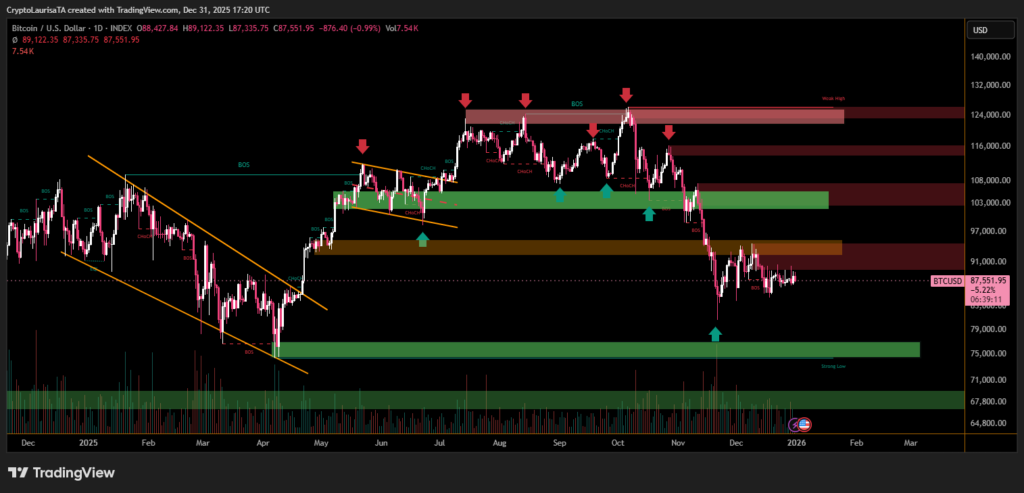
While 2026 may remain a red year for Bitcoin’s price, its evolution as a functional payment system is accelerating, laying groundwork for long-term adoption and resilience.
Disclaimer
This content is for informational purposes only and does not constitute financial, investment, or legal advice. Cryptocurrency trading involves risk and may result in financial loss.