

Analysts warn that low staking yields, high embedded fees and a collapsing NAV premium could leave investors exposed.
BitMine Immersion Under Pressure as ETH Bet Turns Sour
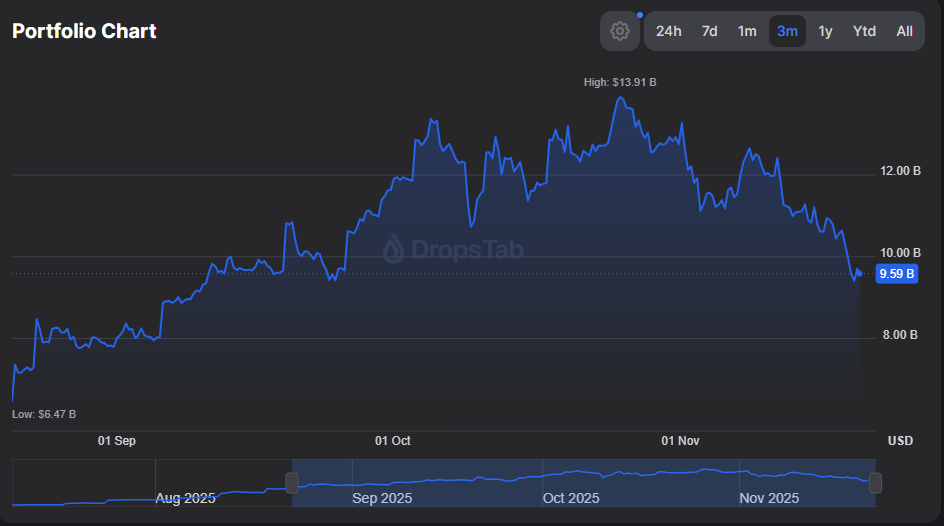
BitMine Immersion, one of the largest Ethereum-focused digital asset treasury firms, is grappling with severe unrealized losses following the sharp decline in Ether’s price. Despite reporting strong fiscal earnings, analysts caution that the company faces deeper structural problems that could challenge investors in the long run.
Introduction: A $4 Billion Paper Loss Despite Strong Earnings
The company announced $328 million in net income for the fiscal year ending August 31, along with diluted earnings of $13.39 per share and a symbolic dividend payout. It also revealed plans to launch a new staking-focused product, MAVAN, in early 2026.
However, the market reaction has been far from positive. With Ether prices falling more than 45% since the August peak, BitMine Immersion is now estimated to be sitting on over $4 billion in unrealized losses, raising concerns about the sustainability of its strategy.
Analysts Warn of Deep Structural Issues
Markus Thielen, founder of 10x Research, argues that Digital Asset Treasury firms like BitMine are built on complex, costly layers that quietly drain shareholder value.
“Investors find themselves trapped in the structure, unable to get out without significant damage — a true Hotel California scenario,” Thielen said.
He pointed out that BitMine’s leadership and advisory agreements could extract $157 million per year over a decade, weakening returns even further.
The company’s stock has reflected these concerns, plunging 84% from its July peak, while its once-attractive NAV premium has vanished entirely.
Low Staking Yields Add Pressure
Another major challenge is Ether’s staking yield, a key revenue driver for BitMine’s holdings.
According to the CESR Composite Ether Staking Rate, yields are currently around 2.9%, significantly below the return offered by risk-free U.S. money market funds.
Thielen warned that no serious institutional allocator will accept that level of yield, especially when ETH’s high price volatility puts the underlying collateral at constant risk.
Once operational expenses and intermediaries are factored in, the effective yield to shareholders becomes even weaker, raising doubts about the long-term viability of the model.
Investors Facing a Potential Liquidity Trap
With heavy embedded fees, low yields and a collapsing NAV premium, analysts caution that holders could be left with limited exit options.
BitMine’s situation highlights growing concerns around Digital Asset Treasury structures, as falling crypto prices expose the costs, opacity and risks embedded in their business models.
Disclaimer
This content is for informational purposes only and does not constitute financial, investment, or legal advice. Cryptocurrency trading involves risk and may result in financial loss.