

Gold Market Outlook Strengthens on Geopolitical Risk and Rate Cut Expectations
Gold prices surged to a fresh record on Friday, reaching an all-time high of $4,536 per ounce as investors increased exposure to safe-haven assets. The rally reeflects a convergence of geopolitical uncertainty, shifting monetary policy expectations, and sustained institutional demand, positioning bullion as one of the strongest-performing assets of the year.
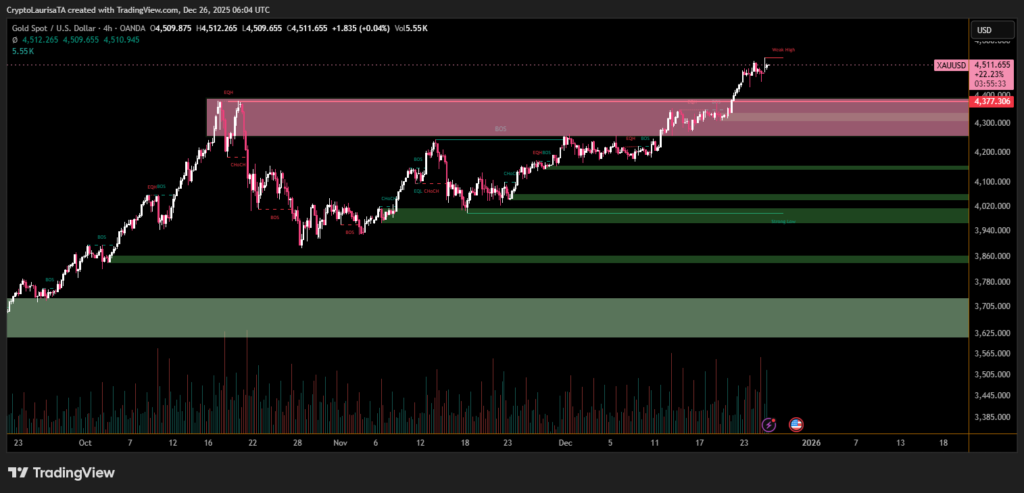
Rising global instability has played a central role in golds advance. Investor sentiment remains cautious amid ongoing hostilities between Russia and Ukraine, renewed concerns following Washington’s military strike against ISIS targets in Nigeria, and disruptions tied to the U.S. blockade of crude shipments from Venezuela. These developments have elevated risk aversion, prompting capital rotation into traditionally defensive assets such as gold.
Monetary policy dynamics are further reinforcing golds upside. M arkets are increasingly pricing in two quarter-point U.S. interest rate cuts next year, as inflation shows signs of easing and labor market conditions gradually soften. Although Federal Reserve officials remain divided on the timing and pace of easing, declining real yield expectations continue to improve gold’s relative appeal.
Gold’s rally is not purely speculative. Central bank puurchases and steady ETF inflows have provided structural support, reflecting long-term diversification strategies rather than short-term trading flows. As a result, bullion has climbed more than 70% so far this year, marking its strongest annual performance since 1979.
With momentum firmly intact, gold’s price behavior suggests continued sensitivity to macroeconomic data and geopolitical headlines. Sustained demand from institutions and central banks may help maintain elevated price levels, even if short-term volatility increases near record highs.
Disclaimer
This content is for informational purposes only and does not constitute financial, investment, or legal advice. Cryptocurrency trading involves risk and may result in financial loss.