
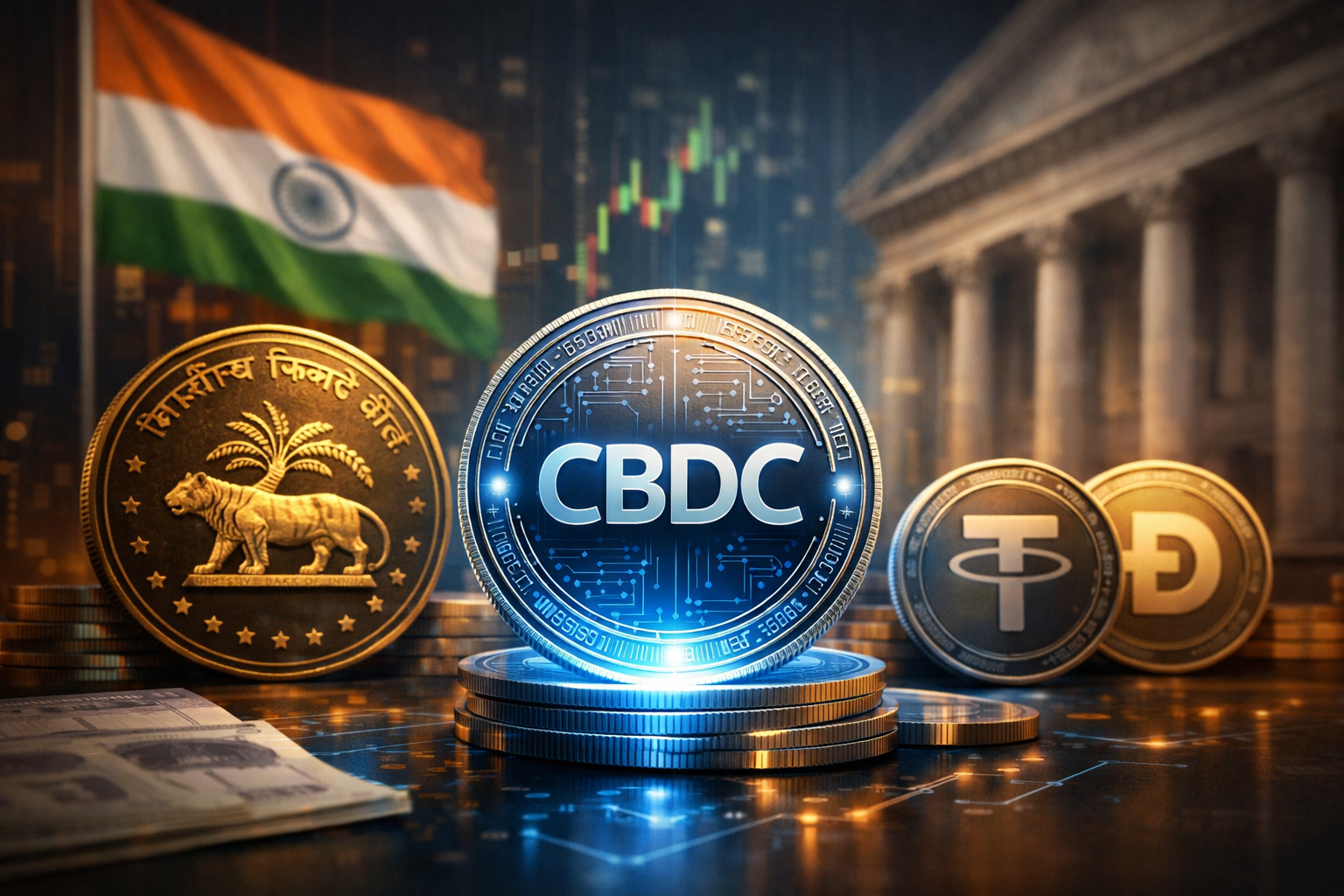
The Reserve Bank of India says central bank digital currencies are better suited to protect monetary trust than privately issued stablecoins.
India’s central bank is calling on governments worldwide to place greater emphasis on central bank digital currencies (CBDCs) rather than privately issued stablecoins, warning that the rapid growth of stablecoins could pose risks to financial stability if left unchecked.
Why India Favors CBDCs
In its latest financial stability assessment, the Reserve Bank of India (RBI) argued that CBDCs help preserve the singleness of money and the integrity of the financial system. According to the RBI, sovereign digital currencies should remain the ultimate settlement asset and the primary anchor of trust in modern monetary systems.
The central bank cautioned that stablecoins may introduce new vulnerabilities, especially during periods of market stress, by creating parallel payment systems that are not fully aligned with national monetary policy. Jurisdictions were urged to carefully evaluate these risks before allowing stablecoins to scale further.
The RBI acknowledged that CBDCs and stablecoins share similar features, including fast settlement, programmability, and lower transaction costs. However, it stressed that CBDCs offer these benefits with the added credibility and safety of central bank backing, helping safeguard monetary sovereignty.
Global Adoption Remains Limited
Despite growing debate and experimentation, CBDC adoption remains slow globally. Only Nigeria, the Bahamas, and Jamaica have fully launched national digital currencies, while dozens of other countries remain in research or pilot stages.
As stablecoins expand rapidly, India’s position highlights a growing divide between public and private digital money, with CBDCs increasingly framed as the preferred foundation for future payment systems.
Disclaimer
This content is for informational purposes only and does not constitute financial, investment, or legal advice. Cryptocurrency trading involves risk and may result in financial loss.