
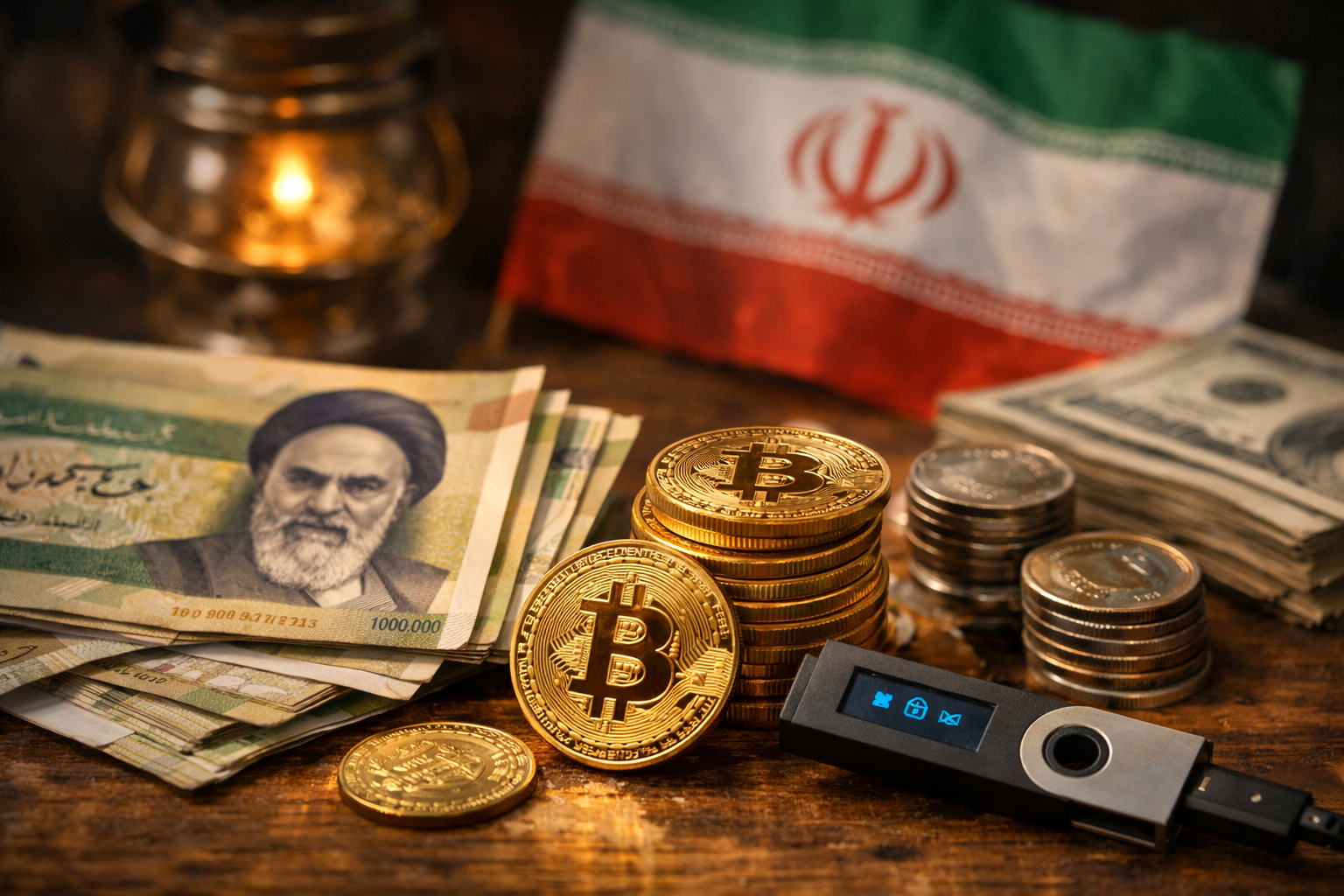
Iran’s cryptocurrency ecosystem expanded sharply to approximately $7.8 billion in total activity as widespread protests and economic instability pushed citizens toward digital assets as a financial safeguard. The surge followed a rapid deterioration of the Iranian rial, which hit historic lows against major global currencies, triggering public demonstrations across the country.
Bitcoin Withdrawals Signal Shift Toward Self-Custody
Blockchain data indicates a notable increase in Bitcoin withdrawals from local exchanges to personal wallets, suggesting individuals are moving assets into self-custodied storage to protect purchasing power. This trend accelerated during periods of heightened unrest, reflecting growing concern over currency devaluation and restricted access to traditional banking channels.

In an environment marked by capital controls, sanctions pressure, and intermittent internet disruptions, cryptocurrencies have provided liquidity and flexibility. Bitcoin, in particular, offers portability and resistance to centralized control, making it attractive for individuals seeking financial autonomy during uncertainty.
Alongside civilian usage, blockchain analysis shows state-linked entities accounted for a significant share of crypto flows in late 2025, highlighting the dual use of digital assets within the country’s economy.
With millions of Iranians estimated to use cryptocurrency and economic volatility persisting, digital assets are expected to remain a key financial instrument. As protests continue and monetary confidence weakens, crypto adoption is likely to stay elevated as both a store of value and a transactional alternative.
Disclaimer
This content is for informational purposes only and does not constitute financial, investment, or legal advice. Cryptocurrency trading involves risk and may result in financial loss.