
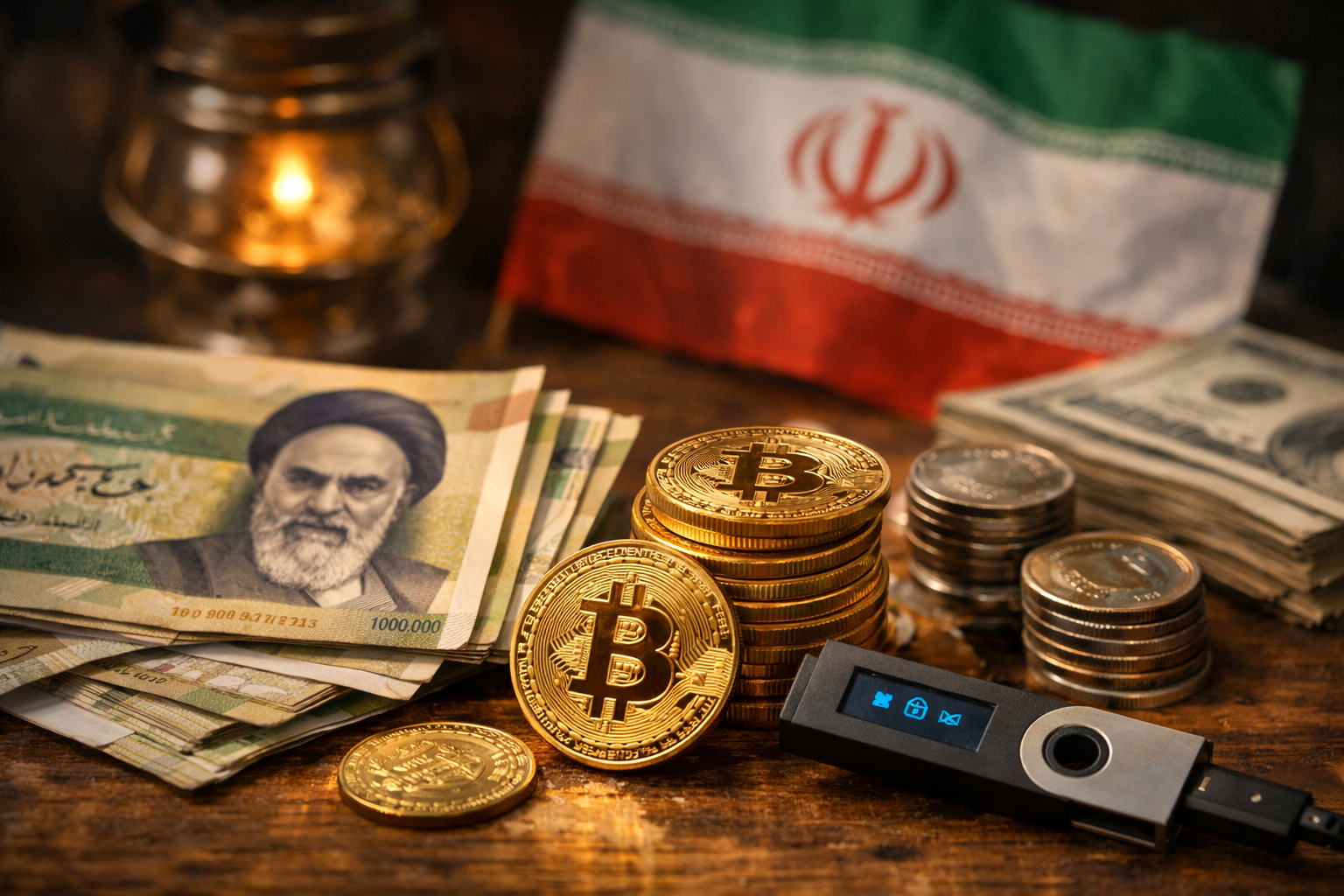
How Bitcoin and Alternative Networks Could Still Function Without Full Connectivity
As nationwide protests spread across Iran following worsening economic conditions and the Iranian rial hitting record lows against the US dollar, the government has imposed a near-total internet shutdown. This has raised a critical question for millions of Iranians: can cryptocurrency still work without internet access?
Crypto Adoption in Iran During Economic Crisis
Iran already has a significant crypto user base, with an estimated seven million users. Between January and July 2025, roughly $3.7 billion in crypto flows were tracked in the country. For many citizens, digital assets have served as a store of value amid inflation and currency devaluation.
While internet shutdowns severely limit crypto use, several technologies offer partial solutions. Satellite-based systems can broadcast Bitcoin transaction data globally without relying on local infrastructure. This allows users to receive blockchain data even during blackouts.
In addition, peer-to-peer mesh networks using Bluetooth or radio signals can transmit signed Bitcoin transactions between nearby devices. These methods allow transactions to be prepared and shared offline, though eventual internet access is still required for on-chain confirmation.
Other experimental tools use long-range radio networks or mobile telecom signals to move Bitcoin data without standard internet access. While not fully decentralized yet, they highlight how crypto infrastructure continues to evolve during times of crisis.Iran’s internet blackout underscores both the limitations and resilience of decentralized finance. Even offline, crypto systems offer alternatives that traditional finance cannot easily replicate.
Disclaimer
This content is for informational purposes only and does not constitute financial, investment, or legal advice. Cryptocurrency trading involves risk and may result in financial loss.