
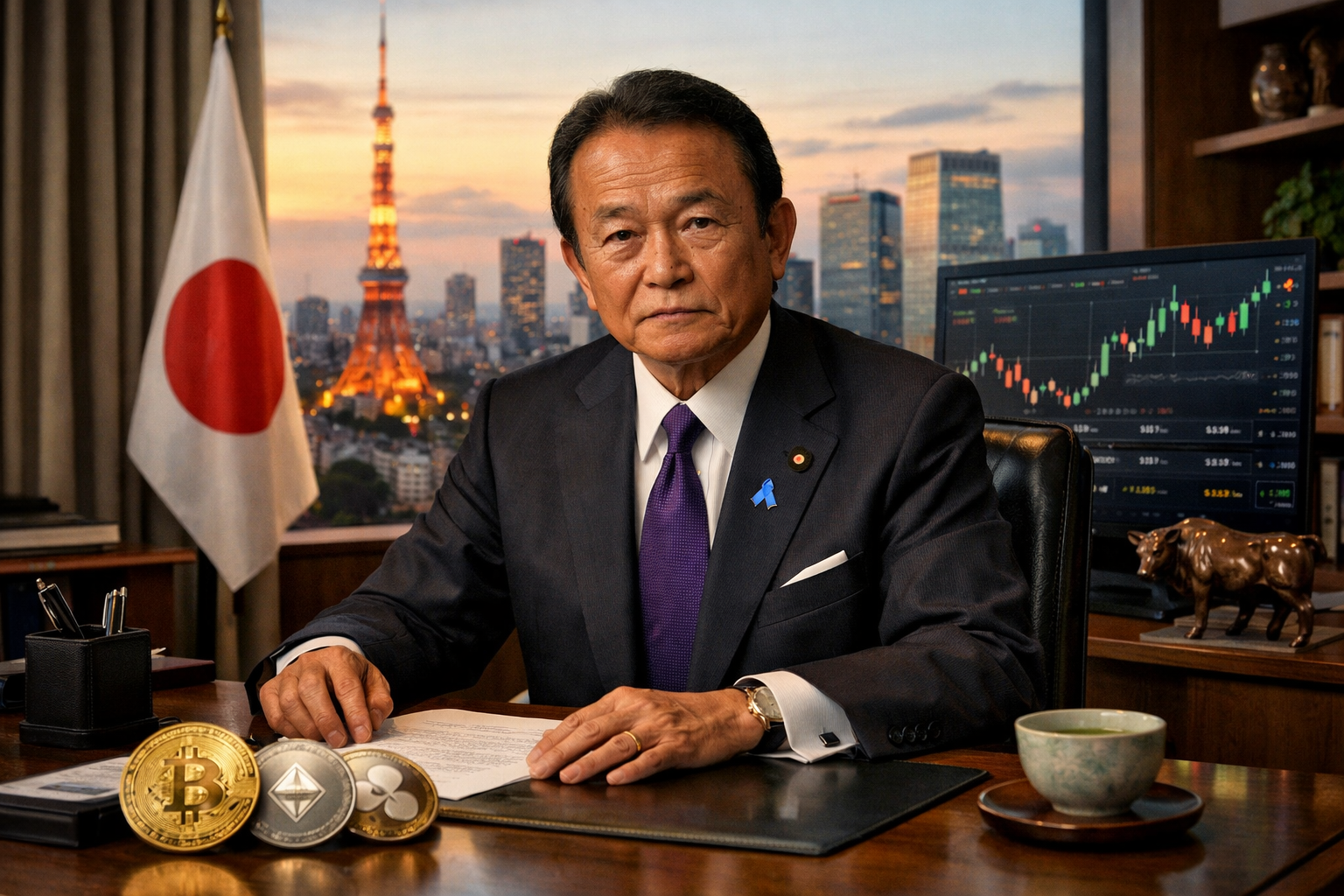
Policy shift signals deeper alignment between digital assets and traditional financial markets
Japan is taking another step toward integrating digital assets into its financial system. During a New Year address at the Tokyo Stock Exchange, the country’s finance minister expressed strong backing for bringing cryptocurrencies into mainstream stock and commodity exchanges, positioning digital assets as part of Japan’s long-term economic strategy.
The finance minister emphasized that stock and commodity exchanges play a crucial role in expanding public access to blockchain-based assets. By leveraging existing financial infrastructure, exchanges could act as regulated gateways for investors seeking exposure to cryptocurrencies in a familiar environment.
She referenced developments in the United States, where crypto-linked exchange-traded products have become widely used investment tools, particularly for inflation hedging. While Japan does not yet offer domestic crypto ETFs, the comparison suggests similar frameworks may emerge.
2026 Declared a “Digital Year”
The minister designated 2026 as Japan’s “digital year,” pledging government support for exchanges building technology-driven trading environments. This initiative aligns with broader efforts to address long-standing economic challenges, including deflation, through innovation and growth-focused investment.
Japan has already moved to reclassify more than 100 cryptocurrencies as financial products, potentially enabling wider use within traditional finance. Authorities are also pursuing lower tax rates on crypto holdings, reinforcing the country’s ambition to become a global digital asset hub.
Together, these policy signals point to deeper integration between Japan’s capital markets and the evolving digital asset economy.
Disclaimer
This content is for informational purposes only and does not constitute financial, investment, or legal advice. Cryptocurrency trading involves risk and may result in financial loss.