
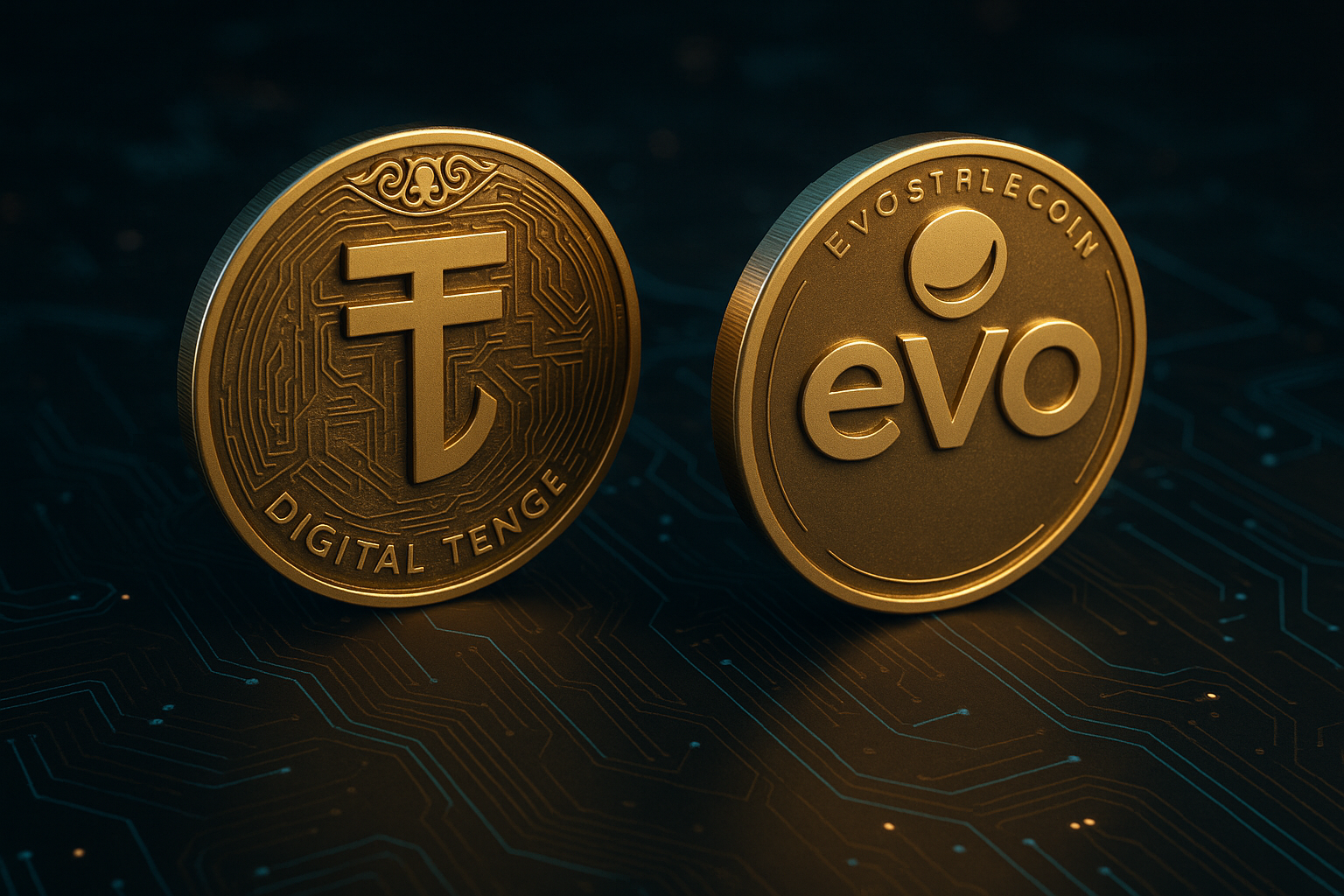
Kazakhstan is taking a two-tier approach to digital assets, pushing forward with its central bank digital currency (CBDC), the digital tenge, while also supporting the launch of Evo stablecoin in collaboration with Solana and Mastercard. Rather than competing, the two projects are designed to complement each other as the nation accelerates efforts to become Central Asia’s leading crypto hub.
The Evo stablecoin, rolled out in September 2025, is among the world’s first state-backed stablecoins, issued with the support of the National Bank of Kazakhstan and local financial institutions. Unlike the CBDC, Evo is ecosystem-driven, meaning its circulation will depend on adoption by businesses, fintech firms, and global partners.
On the other hand, the digital tenge — first launched in 2023 — is a sovereign project fully managed by the National Bank of Kazakhstan. It is being tested as legal tender, with the goal of becoming a trusted medium of exchange for interbank settlements and nationwide payment infrastructure.
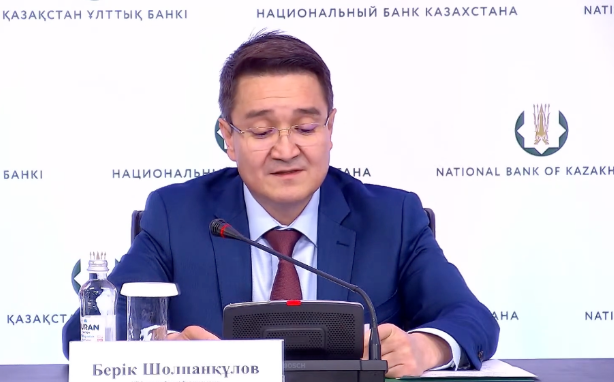
As Deputy Governor Berik Sholpankulov explained, the CBDC is meant to provide financial sovereignty and resilience, while stablecoins like Evo act as practical tools for cross-border payments, e-commerce, and global integration.
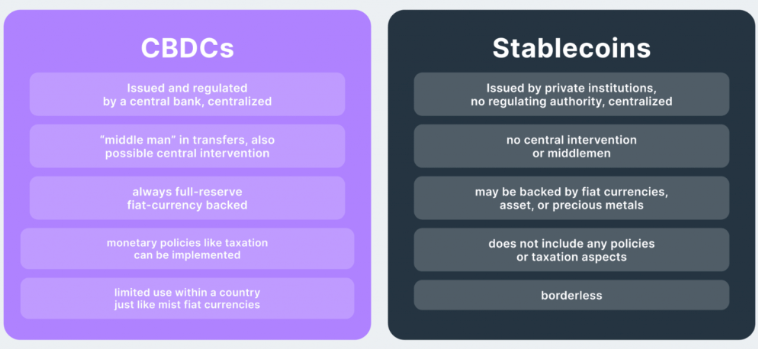
A Two-Tier System for Financial Innovation
Experts highlight that Kazakhstan’s model reflects a two-tier system:
- CBDC (Digital Tenge): Focused on monetary policy, interbank settlements, and sovereign payment security.
- Stablecoin (Evo): Designed to boost private-sector adoption, attract international projects, and simplify global crypto payments.
This approach contrasts with the U.S. stance under the Trump administration, which banned CBDCs in favor of private stablecoins. For Kazakhstan and other emerging economies, however, a CBDC remains critical for independence from foreign-backed currencies and for safeguarding the national financial system.
Kazakhstan’s Push to Become a Crypto Hub
Kazakhstan is rapidly positioning itself as a regional leader in blockchain and crypto innovation. Recent milestones include:
- First spot Bitcoin fund in Central Asia.
- Regulatory fees paid in stablecoins like USDT.
- Development of a state-backed crypto reserve.
- Strategic partnerships with global exchanges like Binance.
In September, Kazakhstan approved a crypto fund with BNB exposure, further showing its willingness to bridge traditional finance and digital assets.
The government has also fostered ties with industry leaders. President Kassym-Jomart Tokayev recently met with former Binance CEO Changpeng Zhao to discuss a potential KZTx stablecoin and tokenization projects in Alatau City. At the same Digital Bridge 2025 forum, Telegram co-founder Pavel Durov announced the launch of an AI research lab in Astana, cementing Kazakhstan’s role in merging crypto, AI, and fintech innovation.
Kazakhstan’s digital tenge and Evo stablecoin are not rivals but partners in building a balanced digital economy. The CBDC ensures financial sovereignty, while Evo accelerates crypto adoption and cross-border integration. Together, they form a dual-track system that could become a blueprint for other nations balancing sovereign control with global competitiveness in the crypto economy.
Disclaimer
This content is for informational purposes only and does not constitute financial, investment, or legal advice. Cryptocurrency trading involves risk and may result in financial loss.