

The cryptocurrency market is entering 2026 facing a structural transformation rather than a hype-driven cycle, as macroeconomic pressure and institutional participation reshape how bitcoin trades and absorbs capital. Market participants are increasingly focused on liquidity mechanics, regulation, and long-term allocation behavior, rather than short-term speculative rallies.
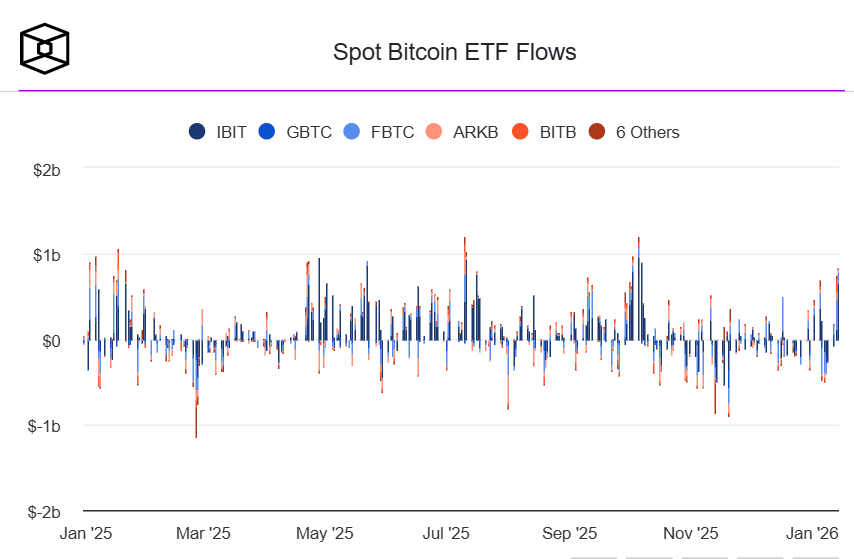
According to market analysis, bitcoin remains the core barometer of risk sentiment, but the pathways for demand have changed. In 2025, spot bitcoin ETFs and digital asset treasury firms generated nearly $44 billion in net demand, yet price appreciation lagged historical norms. This was largely due to long-term holders supplying liquidity, reducing the reflexive upside typically seen in earlier bull cycles. As a result, the market demonstrated an ability to absorb large inflows without extreme volatility.
Macro Forces Dominate Crypto Performance
Persistent inflation, slower monetary easing, and muted global growth expectations continue to cap upside for risk assets. Periods of stability may conceal deferred volatility, especially if liquidity tightens again. At the same time, ETF inflows slowed in 2025, and treasury-focused firms face reduced equity issuance capacity as valuation premiums compress.
Stablecoin liquidity has reached record highs, while advancing U.S. regulation could redefine onchain liquidity formation. Meanwhile, tokenized financial assets are expanding rapidly, with real-world asset tokenization expected to unlock new global demand. Together, these trends suggest 2026 will be a macro-driven stress test, where market structure matters as much as price direction.
Disclaimer
This content is for informational purposes only and does not constitute financial, investment, or legal advice. Cryptocurrency trading involves risk and may result in financial loss.