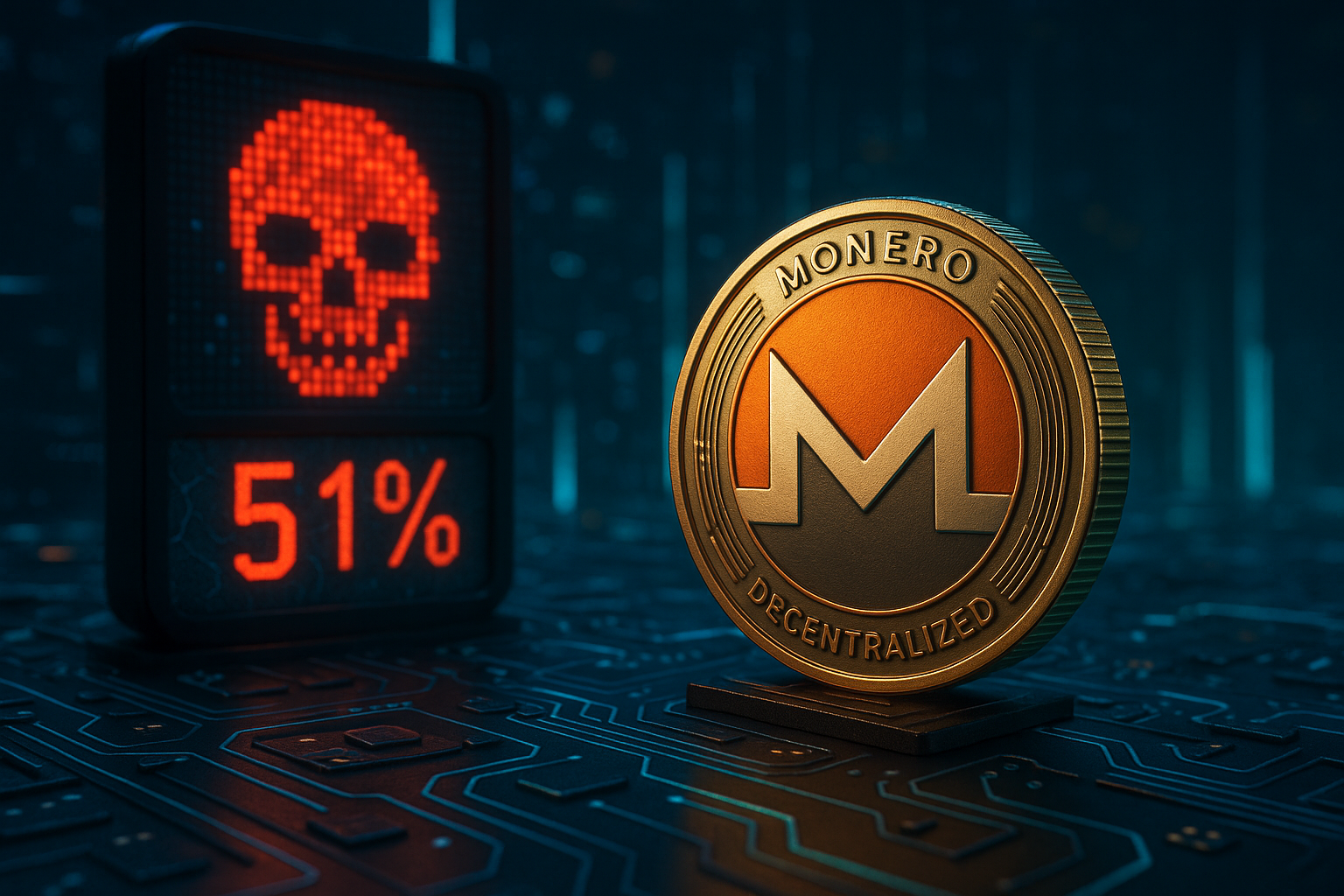
Monero, a leading privacy-focused cryptocurrency, is facing serious security concerns after reports of a 51% attack on its network. The attack has sparked an urgent discussion within the community about overhauling its Proof-of-Work (PoW) consensus mechanism to safeguard the blockchain.
What Happened?
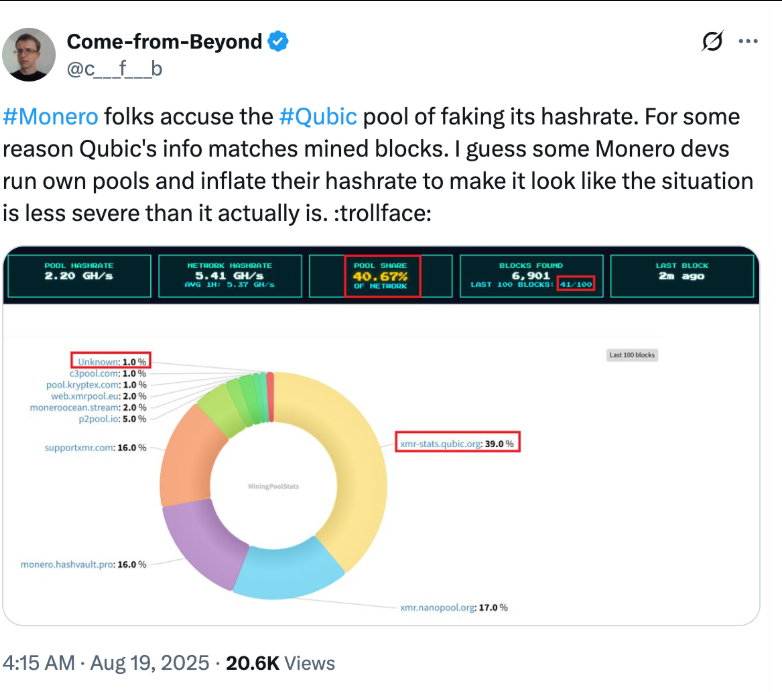
In August, Qubic, an AI-focused blockchain and mining pool, reportedly gained majority control over Monero’s hashing power, raising fears of a full-scale 51% attack. Such an attack could allow double-spending, block reorganization, and undermine the integrity of the network.
At the time of writing, Qubic controls 2.18 GH/s of Monero’s total hash rate, making it the largest mining pool. The second-largest, SupportXMR, holds 1.18 GH/s, according to MiningPoolStats.
Although some community members deny a full takeover, major exchanges are taking precautions. Kraken temporarily suspended Monero deposits and later reinstated them with stricter rules — 720 confirmations required before crediting funds.
Proposed Solutions to Prevent Future Attacks
The Monero community is debating several measures to strengthen network security:
- Localized Mining Hardware – Encouraging miners to diversify operations to avoid centralization.
- Merge Mining – Allowing Monero to be mined alongside Bitcoin or other major cryptocurrencies.
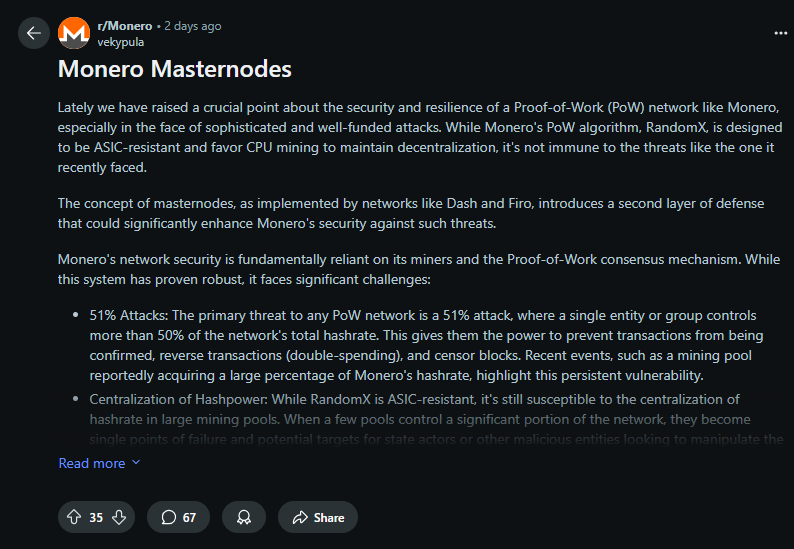
- Dash’s ChainLocks – Implementing a masternode-based system to lock blocks once verified, preventing reorganizations even with majority hash power.
Dash DAO member Joel Valenzuela explained that ChainLocks could protect Monero by creating an additional security layer above PoW.
This incident raises broader concerns for ASIC-resistant blockchains, which rely on GPU-based mining. According to experts, any chain without strong economic incentives could face similar threats.
Adding to the controversy, Qubic’s community voted to target Dogecoin next, although its founder stated that such an attack requires months of development and that the focus remains on XMR mining for now.
Disclaimer
This content is for informational purposes only and does not constitute financial, investment, or legal advice. Cryptocurrency trading involves risk and may result in financial loss.