
New integration aims to drive mainstream crypto adoption in payments
PayPal, a global payments leader with more than 400 million active accounts, has announced a major expansion into cryptocurrency-based peer-to-peer (P2P) payments. The company will now allow users to send and receive Bitcoin (BTC), Ethereum (ETH) and its own stablecoin PayPal USD (PYUSD) through its platform — a move expected to strengthen crypto’s role in real-world financial transactions.
PayPal links and global rollout
The new feature, PayPal links, will generate personalized one-time links for easy transfers across text, email or chat. Initially launching in the United States, the service will later expand to the United Kingdom, Italy and additional markets.
In addition, users can directly transfer supported cryptocurrencies — including BTC, ETH, PYUSD and more — to PayPal and Venmo users, as well as to external wallets, bridging centralized and decentralized finance.
Giving utility to digital assets
“Peer-to-peer payments have always been one of the most powerful use cases for digital assets,” said a payments strategist at a U.S.-based fintech firm. “By letting users send Bitcoin and Ethereum directly to wallets, PayPal is making crypto more practical, not just speculative.”
Importantly, PayPal confirmed that personal transfers between friends and family will not trigger 1099-K tax reporting, aligning with existing IRS exemptions.
Strengthening PYUSD and global adoption
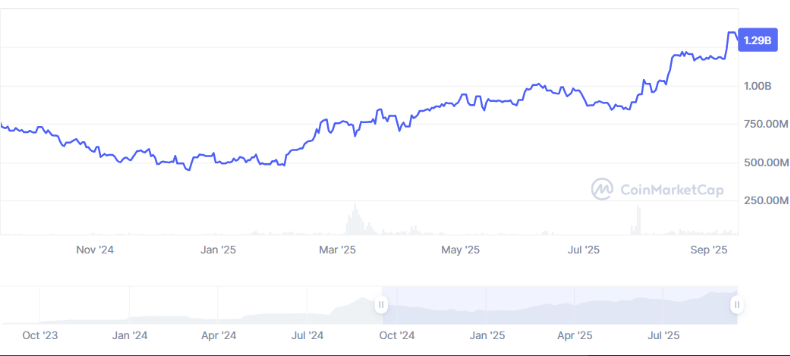
PayPal’s stablecoin PYUSD is also gaining traction, with its market capitalization nearing $1.3 billion. Analysts suggest that this growth, coupled with PayPal’s P2P expansion, could cement PYUSD as a leading stablecoin in the payments sector.
“PYUSD has the advantage of being integrated into one of the world’s largest payment ecosystems,” said a blockchain researcher. “This makes it uniquely positioned to compete with existing dollar-pegged tokens.”
Competitive landscape
PayPal’s announcement follows similar moves by crypto-native companies. Earlier this year, Kraken launched a payments app enabling cross-border asset transfers. However, PayPal’s entry into P2P crypto payments carries added weight due to its established global reach.
As adoption broadens, the integration of BTC, ETH and PYUSD into everyday payments highlights a major step toward mainstreaming blockchain-based financial tools.
Disclaimer
This content is for informational purposes only and does not constitute financial, investment, or legal advice. Cryptocurrency trading involves risk and may result in financial loss.