

Solana Labs’ spinout, Anza, has introduced a transformative proposal titled “Alpenglow,” which aims to make the most significant upgrade to Solana’s core protocol since its inception. This initiative is designed to address long-standing architectural challenges and prepare the network for future scalability.
Alpenglow’s core innovation lies in decoupling Solana’s consensus and execution layers, allowing each to evolve independently. This modular design will bring greater efficiency, improved decentralization, and smoother upgrades across the blockchain.
“Alpenglow is the biggest change to Solana’s core protocol to date,” Anza declared in its proposal, marking a bold new direction for the high-performance blockchain.
The separation of consensus and execution allows for more flexibility. Developers and node operators can now work on upgrades and innovations without affecting the entire system, leading to faster development cycles and better network resilience.
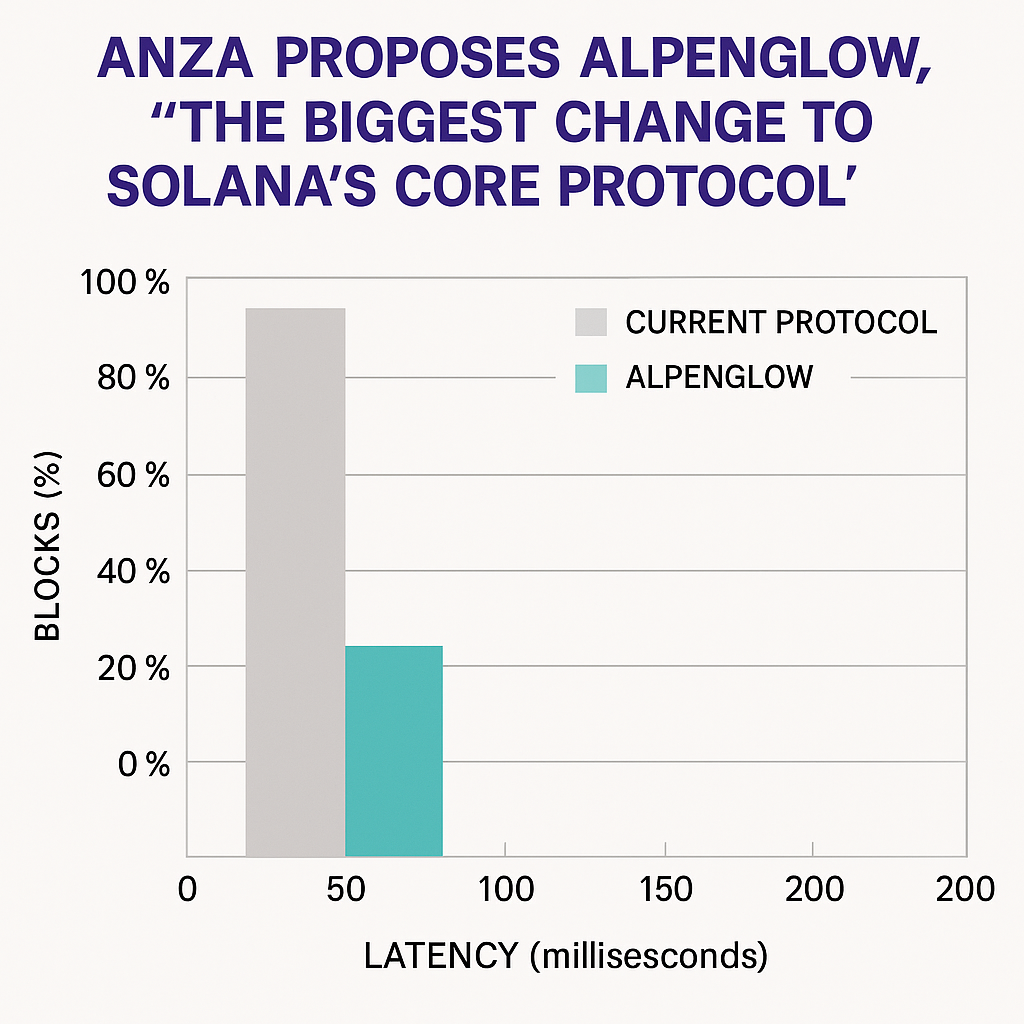
Key Benefits of Alpenglow:
- Modular architecture: Makes it easier to maintain and scale.
- Improved validator efficiency: Validators can focus on specific tasks like consensus or execution.
- More decentralized infrastructure: With distinct layers, third-party contributions and upgrades become more practical.
- Enhanced scalability potential: Allows Solana to better handle surges in user activity and adoption.
This change also aligns Solana more closely with other modular blockchain ecosystems, such as Ethereum’s rollup-centric roadmap. However, Solana retains its unique approach by maintaining ultra-fast execution while layering in flexibility and decentralization.
The crypto community has responded with enthusiasm, viewing Alpenglow as a sign of maturity and technical innovation. Solana’s developer base, which has grown rapidly in the past year, is expected to benefit significantly from this more accessible and maintainable design.
Anza did not give an exact timeline for implementation, but the roadmap will likely unfold through progressive testnet phases and community feedback loops.
Conclusion:
With the Alpenglow proposal, Solana positions itself for long-term sustainability and innovation. As blockchain networks continue to evolve, Solana’s move toward a modular architecture may prove pivotal in its effort to compete with other leading smart contract platforms.