
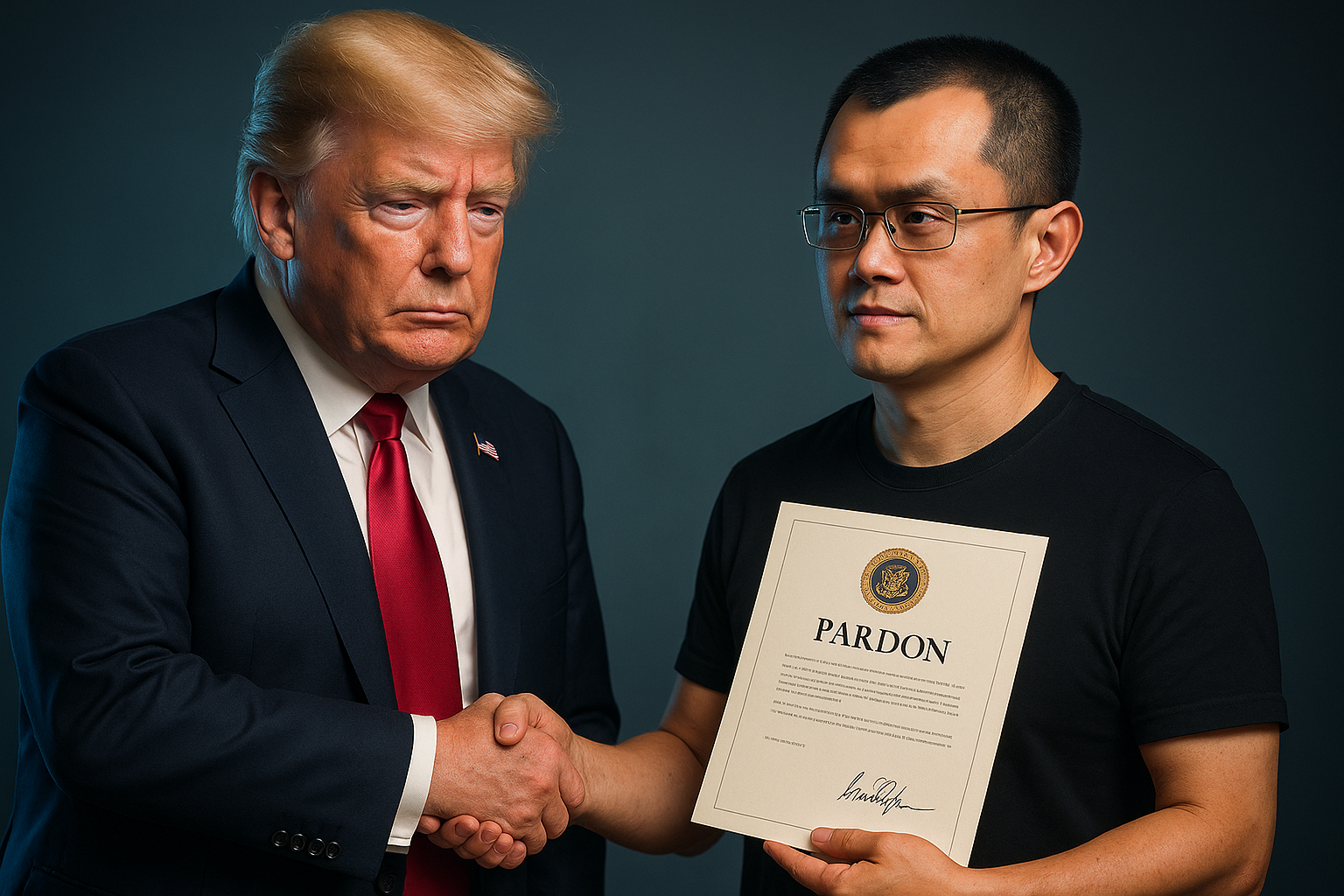
Lawmakers accuse President Trump of favoring crypto billionaires after pardoning Binance’s Changpeng Zhao, reigniting debates on money, power, and political influence in digital finance.
Trump’s CZ Pardon Raises Corruption Allegations
In a controversial move that has sent shockwaves across Washington and the crypto industry, U.S. President Donald Trump’s decision to pardon Binance co-founder Changpeng “CZ” Zhao has drawn fierce criticism from political leaders and regulators.
Representative Maxine Waters, a senior Democrat on the House Financial Services Committee, denounced the pardon as “an appalling but unsurprising reflection of Trump’s presidency.” She accused the president of using political power to protect wealthy crypto figures, claiming the decision shows “massive favors for crypto criminals who have helped line his pockets.”
Zhao, who served four months in prison for violating the U.S. Bank Secrecy Act, admitted Binance failed to maintain proper Anti-Money Laundering controls. Despite his conviction, Trump defended the move, stating that “a lot of people told me what he did is not even a crime.”
Crypto Connections and Financial Gains
Waters further alleged that CZ had been lobbying Trump and his family while channeling large sums into Trump’s private crypto venture, World Liberty Financial (WLFI). She described the act as “a blatant example of pay-to-play corruption.”
Reports suggest that Trump’s second term has seen an extraordinary rise in his personal wealth, largely fueled by the family’s growing cryptocurrency empire. The president’s World Liberty Financial reportedly generated over $1 billion in pre-tax profits last year, with Trump disclosing $57.4 million in direct income from the firm as of June.
A token unlock last month boosted the family’s WLFI stake to an estimated $5 billion, with annual earnings projected to exceed $550 million.
Experts Warn of Political-Crypto Entanglement
Crypto market analysts argue that such political involvement could undermine trust in digital assets. “When financial power merges with political influence, transparency becomes the first casualty,” said one blockchain policy expert.
The case has renewed concerns about regulatory independence and ethics in crypto policymaking. As one analyst summarized, “This pardon doesn’t just affect Binance—it challenges the entire idea of accountability in digital finance.”
The pardon of CZ marks a turning point in the intersection of politics and crypto—one that could define the boundaries of power, influence, and transparency in the years ahead.
Disclaimer
This content is for informational purposes only and does not constitute financial, investment, or legal advice. Cryptocurrency trading involves risk and may result in financial loss.