

Rising debt levels and potential fiscal dominance could drive lower interest rates, boosting Bitcoin, gold, and other alternative assets.
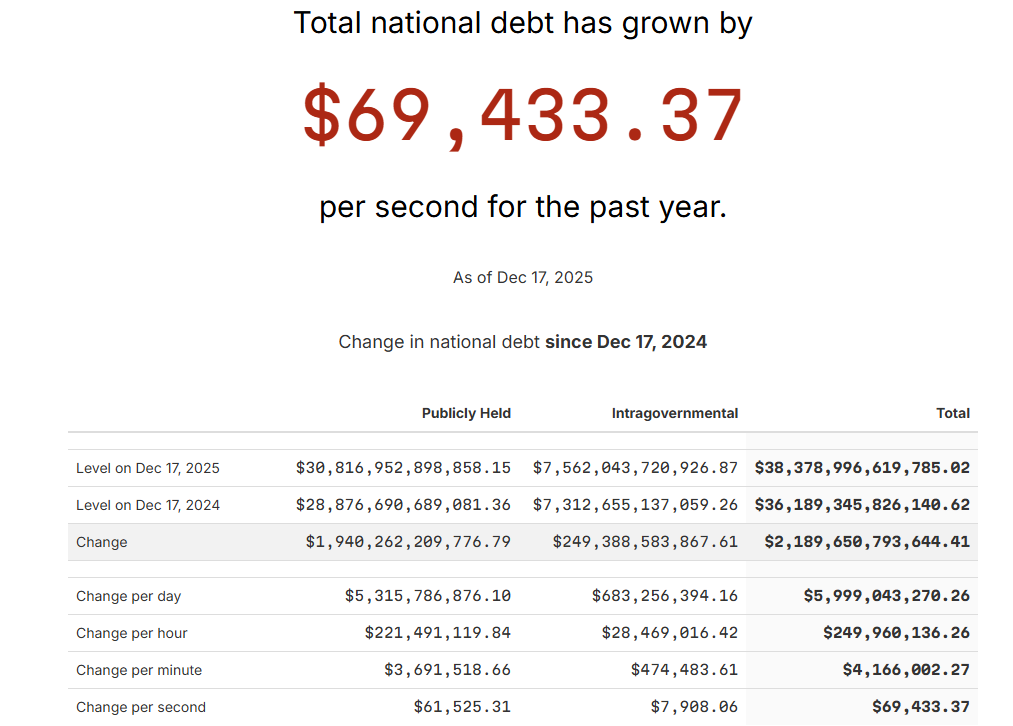
The United States has reached a historic milestone with the national debt soaring to $38.5 trillion, surpassing the country’s total economic output. With a debt-to-GDP ratio exceeding 120%, the U.S. now owes more than $1 for every $1 of annual economic production.
Over 70% of the debt is held by domestic lenders, while the remainder is owed to foreign countries such as Japan, China, and the United Kingdom. Annual interest payments now exceed $1 trillion, outpacing defense spending and creating significant pressure on fiscal policy. Analysts warn that sustained high debt could push the government toward fiscal dominance, where central banks maintain lower interest rates to manage debt servicing costs rather than focusing solely on inflation control.
Historically, low interest rates support risk assets like Bitcoin and gold. The yield curve has steepened, with longer-term bond yields rising while short-term yields remain low, creating opportunities for defensive investments. Additionally, concerns about currency debasement and dollar depreciation have already pushed gold prices up significantly, highlighting the growing demand for alternative assets as a hedge against inflation.
As the U.S. grapples with record debt, investors are likely to see continued interest in assets that offer protection against inflation and currency risk, positioning Bitcoin and gold as potential beneficiaries of the evolving fiscal landscape.
Disclaimer
This content is for informational purposes only and does not constitute financial, investment, or legal advice. Cryptocurrency trading involves risk and may result in financial loss.