
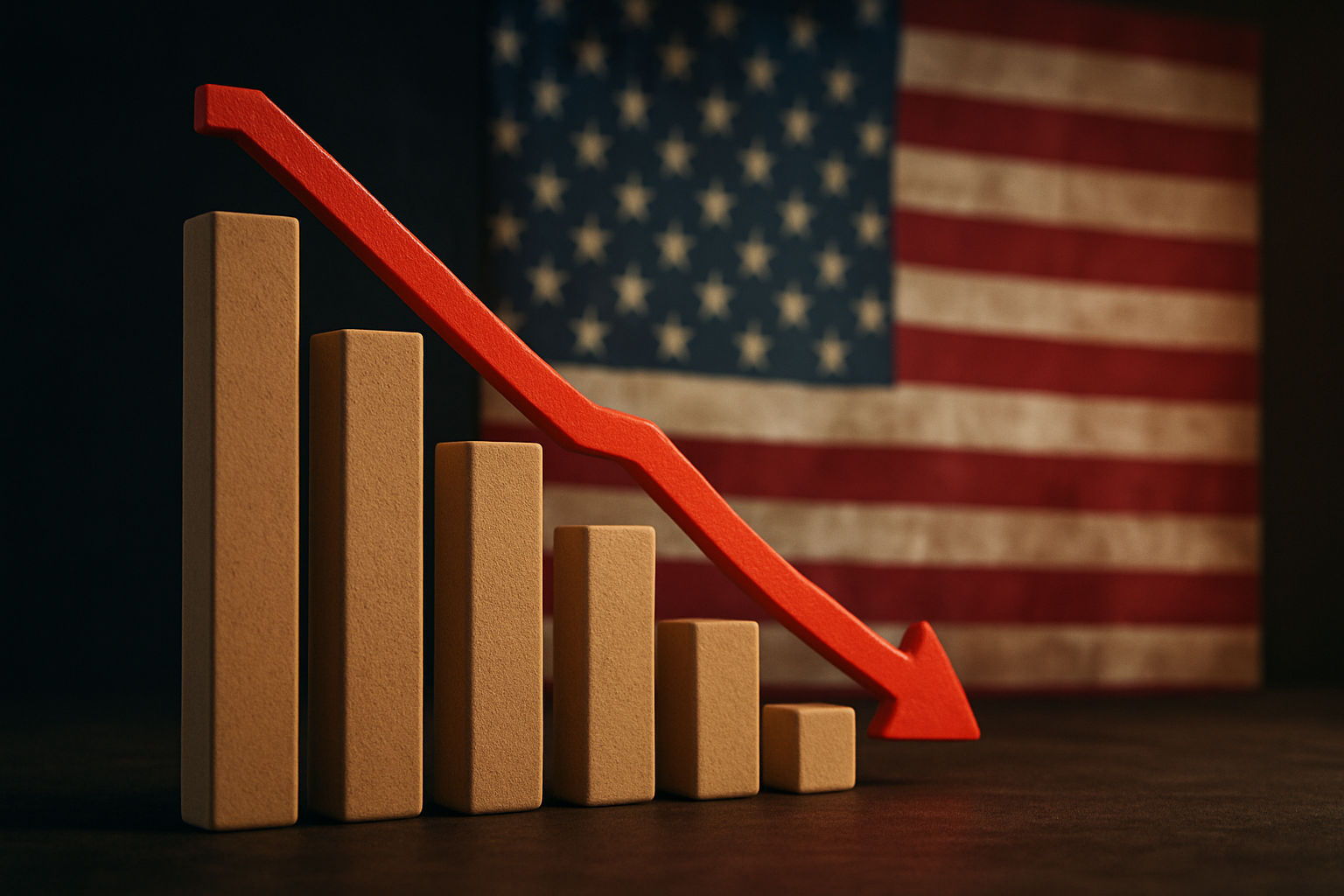
Recession Fears Decline Amid Positive Trade Signals
The probability of a U.S. recession in 2025 has significantly declined, falling to 22% according to data from a leading prediction market. This marks the lowest perceived risk since February, offering a more optimistic economic outlook as trade tensions begin to ease.
Earlier this year, fears of a downturn spiked when the Atlanta Fed’s GDPNow model forecasted a 1.5% contraction in the first quarter. While the actual decline was milder at 0.5%, concerns escalated due to mounting trade pressures and monetary tightening.
Economic Risks Peaked in April
By April 2025, the likelihood of a recession surged to 66%, driven by key developments:
- The U.S. Federal Reserve slowed its pace of balance sheet reduction.
- President Trump introduced new reciprocal tariffs in March during what was dubbed “Liberation Day.”
- Prominent economists and financial institutions began warning of heightened economic risks.
Major Wall Street banks, including Goldman Sachs and JPMorgan, raised red flags. At the time, Goldman estimated recession odds at 45%, with market sentiment aligning with these cautious projections.
Shift in Market Sentiment as Trade Relations Improve
However, sentiment began to shift as negotiations with China progressed, reducing fears of a prolonged trade war. Financial markets responded positively, coining the so-called TACO trade (“Trump Always Chicken Out”), referring to the pattern of aggressive tariff announcements followed by policy reversals.
This easing of trade threats, along with improved financial conditions, led to a substantial recalibration of recession expectations. In June, Goldman Sachs revised its 12-month U.S. recession odds to 30%, signaling increased confidence in the resilience of the economy.
Outlook for 2025 Still Uncertain
Despite the recent improvement, uncertainty remains. A technical recession—defined by two consecutive quarters of negative GDP growth—or a formal declaration by the National Bureau of Economic Research (NBER) is still possible.
Market participants continue to monitor economic indicators closely. Key factors to watch include the trajectory of inflation, future monetary policy decisions, and the ongoing global trade environment.
Disclaimer
This content is for informational purposes only and does not constitute financial, investment, or legal advice. Cryptocurrency trading involves risk and may result in financial loss