
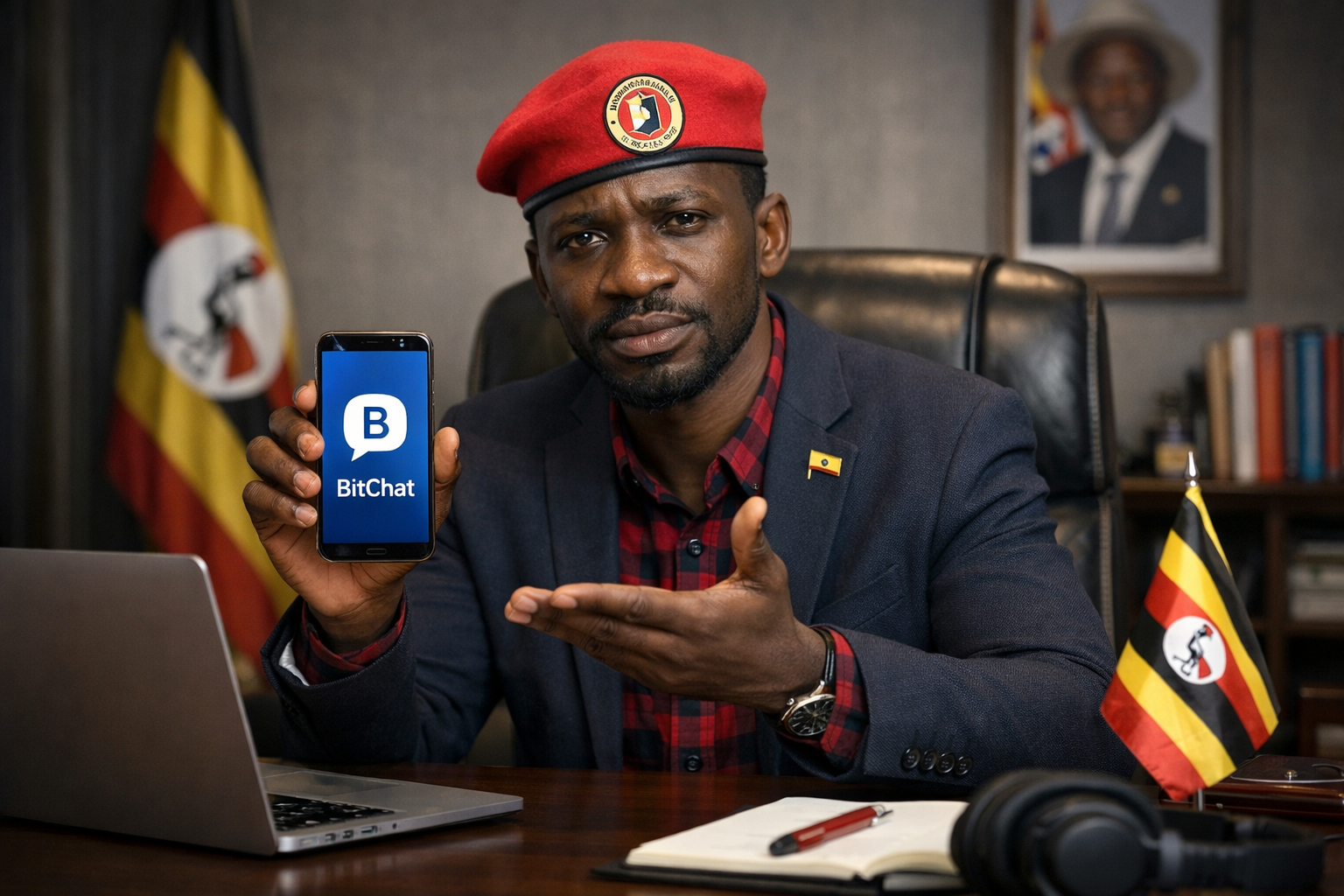
Rising Demand for Decentralized Messaging as Uganda Prepares for 2026 Vote
Uganda’s political landscape is seeing renewed concern over digital access as opposition leader Bobi Wine urges citizens to adopt Bitchat, a decentralized peer-to-peer messaging app, amid fears of a potential internet and social media blackout ahead of the January 15, 2026 presidential election.
Wine has warned that the government may again restrict online communication, referencing past actions during the 2016 and 2021 elections, when nationwide internet shutdowns were enforced under claims of maintaining security. According to human rights groups, such measures disproportionately impact the political opposition by limiting their ability to organize, communicate, and verify election results.
Wine argued that shutdowns are used to prevent citizens from coordinating and demanding accountability during contested elections. The government has historically defended these actions as necessary for public order.
Bitchat Adoption and Search Interest Surge
Bitchat, launched in beta in July, operates via Bluetooth based mesh networks, enabling encrypted, internet-free communication without centralized servers. Following Wine’s call, online search interest in Uganda surged from zero to peak levels, with queries such as “how to use Bitchat” and “Bitchat download” seeing sharp increases.
At the same time, authorities are reportedly moving to limit the importation of satellite internet equipment, raising further concerns about access to independent communication channels.The growing interest in Bitchat reflects public demand for resilient communication tools during politically sensitive periods, as Uganda approaches another closely watched election.
Disclaimer
This content is for informational purposes only and does not constitute financial, investment, or legal advice. Cryptocurrency trading involves risk and may result in financial loss.